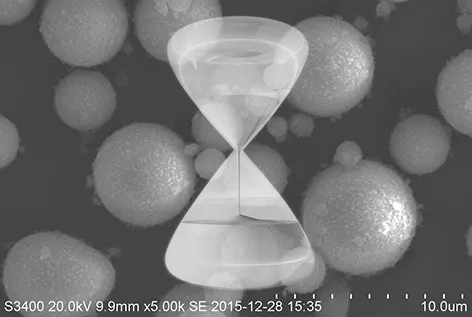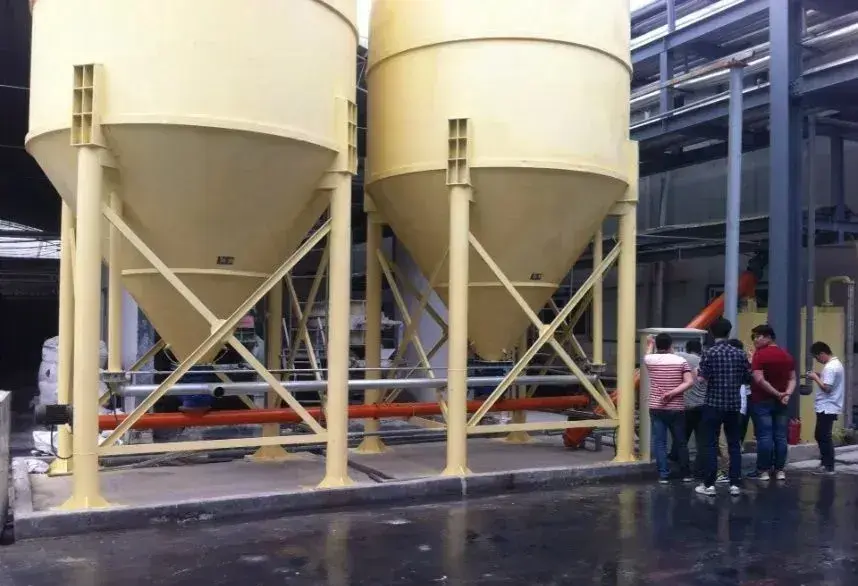
In the era of explosive growth for new energy vehicles and energy storage, lithium batteries are unquestionably at the center, and spherical graphite is the “black gold” supporting half of the lithium battery anode market. It is currently the absolute mainstream in industrial production. Without it, high-energy-density, long-cycle-life power batteries would be impossible. Today, we break down why spherical graphite is irreplaceable? why its spheroidization process is challenging? How it determines the core performance of batteries?
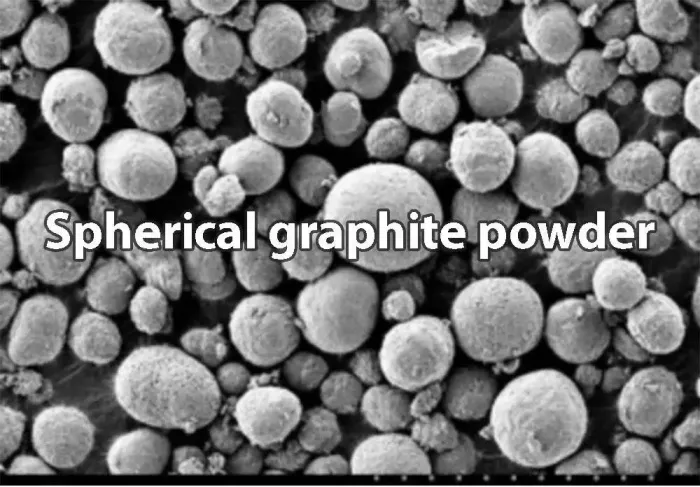
Why Lithium Batteries Cannot Do Without Spherical Graphite
Among the routes for lithium battery anode materials, spherical graphite, derived from natural flake graphite through shaping and spheroidization. It is the first choice for mid-to-high-end power batteries, energy storage batteries, and digital batteries. Compared with ordinary flake graphite and artificial graphite, its advantages are like a “hexagonal warrior”:
Higher tap density, directly enhancing range
Natural flake graphite is flaky, leaving many voids when stacked, with a tap density of only 1.2–1.4 g/cm³. After spheroidization, the particles become round and edges are dulled, increasing tap density to 1.65–1.75 g/cm³. More active material can be accommodated in the same volume, directly improving battery energy density and helping new energy vehicles overcome range limitations
Controllable specific surface area, balancing safety and efficiency
The specific surface area of spherical graphite can be precisely controlled between 3–6 m²/g. This prevents excessive side reactions with the electrolyte that reduce first-cycle efficiency. It can avoid overly small surface areas that hinder lithium-ion migration and degrade rate performance, perfectly balancing battery safety and charge-discharge efficiency
Stable structure, maximizing cycle life
Spherical particles are isotropic, allowing lithium ions to intercalate and de-intercalate more uniformly during charge and discharge, buffering graphite’s 10–13% volume expansion. This reduces electrode cracking and the risk of lithium dendrite formation. High-quality spherical graphite achieves first-cycle Coulombic efficiency ≥93%, and after 2000 cycles, capacity retention exceeds 85%, providing core support for long-life batteries
Cost-performance balance, optimal for industrialization
Compared with artificial graphite, spherical graphite has 30–40% lower raw material costs, 25% lower energy consumption, and reduced carbon emissions. Compared with unshaped natural graphite, its rate performance (1C/0.1C capacity ratio ≥91%) and low-temperature discharge ability (capacity retention of 83–87% at -20°C) are qualitatively improved. It is the most cost-effective choice for commercial applications
Spherical Graphite: The “Precision Transformation” from Flakes to Spheres
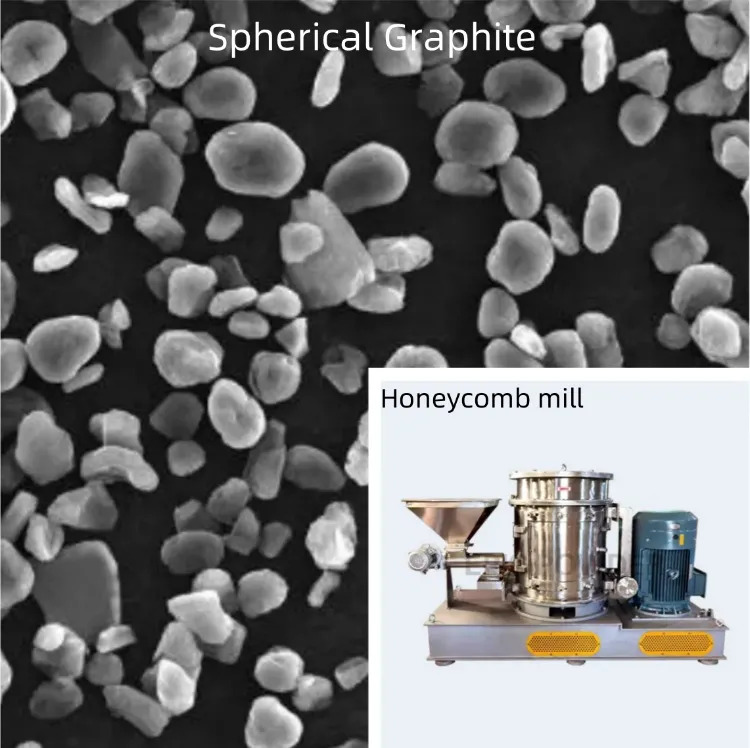
Spherical graphite is not a natural mineral. It is a high-end material created by subjecting natural flake graphite to 12 precise processes, including crushing, shaping, classification, purification, and coating, achieving “atomic-level reconstruction.” In simple terms, irregular flake graphite is “polished” into smooth spheres with a particle size of 12–18 μm. Each step contains significant technical barriers.
Three Core Challenges of Spheroidization
Graphite spheroidization is far from simple “rounding”; the key lies in uniform shaping, carbon layer protection, and strict impurity control. Any misstep directly results in poor rate performance, short cycle life, or reduced safety.
Uniformity of crushing and shaping: particle “roundness” determines the performance baseline
Flake graphite is relatively brittle. During spheroidization, “over-crushing” (particles too fine or uneven) or “insufficient shaping” (sharp edges, poor sphericity) can occur. Uneven particles lead to uneven electrode coating thickness, unbalanced current distribution, and localized overheating, posing safety hazards. Poor sphericity reduces tap density, affecting energy density and causing chaotic lithium-ion migration paths, greatly lowering rate performance. The industry requires precise control of airflow mill parameters and classification accuracy to ensure D50 stays at 12–18 μm with highly concentrated particle size distribution (D10/D50/D90). It is the core challenge in powder engineering.
Carbon layer structure protection: “skeleton intact, life stable”
The layered carbon structure of graphite is the channel for lithium-ion intercalation and de-intercalation. Mechanical forces during spheroidization can easily damage it, increasing irreversible capacity and reducing cycle life. Damaged carbon layers cause continuous electrolyte decomposition, repeated SEI growth, and active lithium consumption. Structural collapse leads to particle fragmentation, soaring internal resistance, and rapid capacity drop. The key challenge is “gentle shaping”—removing edges without damaging internal carbon layers—requiring precise control of spheroidization force, temperature (300–500°C), and duration (4–6 hours) to balance shaping effect with structural integrity.
Metal impurity control: trace impurities, fatal risks
Graphite raw materials and processing equipment may introduce iron, copper, nickel, and other metal impurities, which must be strictly controlled below 5 ppm. Exceeding this limit has severe consequences: metal impurities can form lithium dendrites on the anode surface, pierce the separator, and cause short circuits, fires, or explosions. Impurities also catalyze electrolyte decomposition, accelerating capacity decay and significantly shortening cycle life. Therefore, multiple processes such as strong acid purification, magnetic separation, and high-temperature impurity removal are used to reduce ash content ≤0.05% and magnetic metal content ≤5 ppm, achieving atomic-level purity control.
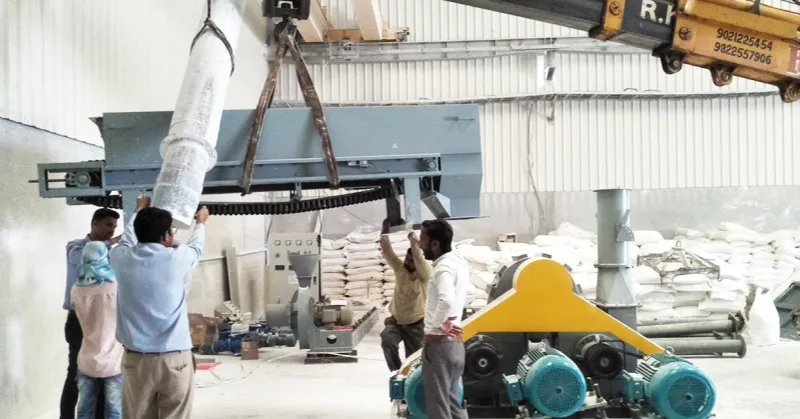
Spherical Graphite: The “Invisible Cornerstone” of the Lithium Battery Industry
From fast-charging and long-range power batteries to energy storage batteries capable of tens of thousands of cycles, and to digital batteries with low-temperature stability, every parameter of spherical graphite defines the performance boundaries of lithium batteries. Simply put, without spherical graphite, the large-scale boom of today’s lithium battery industry would not exist.
As the industry advances, continued innovation in graphite spheroidization, surface modification, and purity control will be critical for powering next-generation energy storage solutions. This will enable the creation of safer, higher-performing, and longer-lasting lithium batteries for the future.

“Thanks for reading. I hope my article helps. Please leave a comment down below. You may also contact Zelda online customer representative for any further inquiries.”
— Posted by Emily Chen