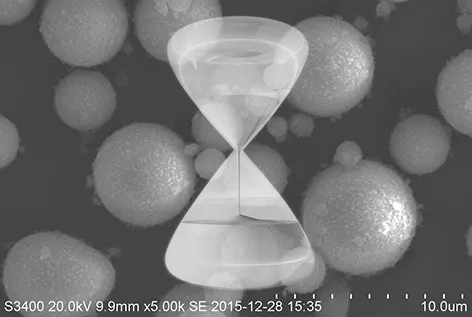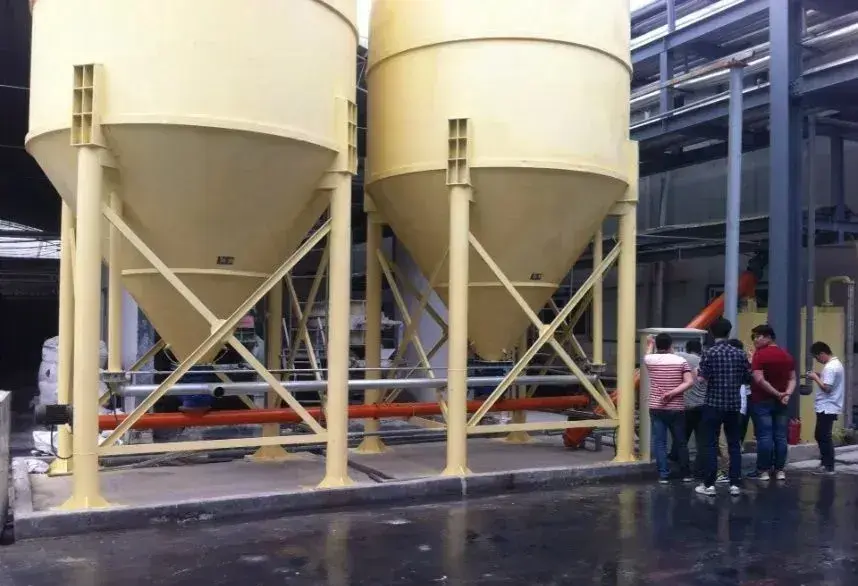
Precipitated Barium Sulfate (BaSO4), a functional inorganic material synthesized through chemical processes, is widely utilized in coatings, plastics, inks, rubber, and lead-acid batteries. Its popularity stems from its high refractive index, chemical inertness, excellent opacity, and high whiteness. However, in the pursuit of “ultrafine” particles, a troublesome side effect often emerges: Hard Agglomeration.
The presence of hard agglomerates prevents nano- or micro-sized particles from dispersing as individual units within a matrix. This results in rough coating surfaces, degraded mechanical properties in plastics, and weakened tinting strength in inks. This article delves into the causes of hard agglomeration and explores how advanced mechanical milling and surface modification techniques can resolve this industry-wide challenge.
I. The Formation of Hard Agglomeration: The “Dead Knot” of the Microscopic World
To break hard agglomerates, one must first understand how they differ from “soft agglomerates.” Soft agglomerates are typically held together by weak Van der Waals forces or electrostatic attraction and can be dispersed through simple stirring. In contrast, hard agglomerates involve much stronger physical and chemical bonding.
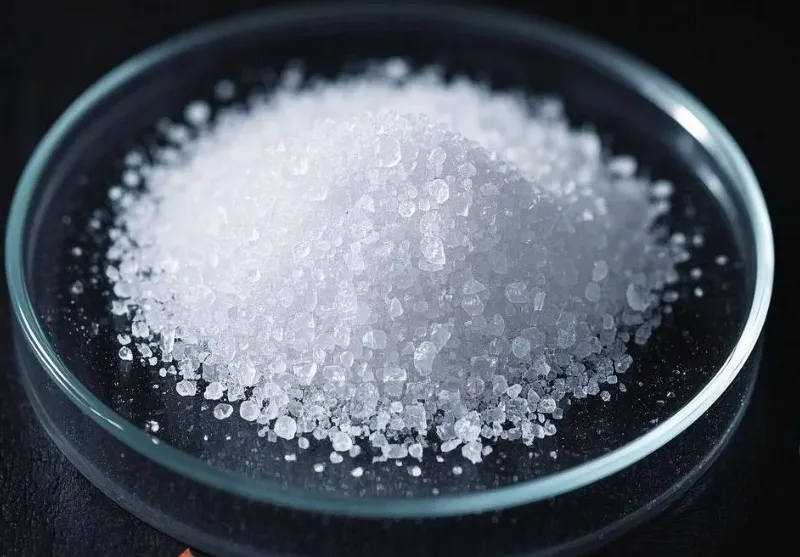
- Chemical Bonding and “Solid Bridge” Theory: During the production of precipitated barium sulfate, if washing is incomplete, residual salts (such as Na2SO4) can precipitate and recrystallize at the contact points between particles during drying. This forms “solid bridges” with a structural strength nearly equal to that of the original crystal.
- High-Temperature Sintering: During drying or calcination, excessive local temperatures can cause atoms on the particle surfaces to diffuse, leading to physical fusion between adjacent particles.
- Hydrogen Bonding and Strong Liquid Bridges: Hydroxyl groups (-OH) on the surface of barium sulfate form strong hydrogen bonds in the presence of residual moisture. As moisture is completely removed, these bonds transform into tightly packed forces that are extremely difficult to break.
II. Advanced Mechanical Milling: The “Scalpel” for Breaking Agglomerates
Given the extreme strength of hard agglomerates, traditional ball milling often proves inefficient and risks introducing metal contamination. Modern industry relies on several advanced technologies:
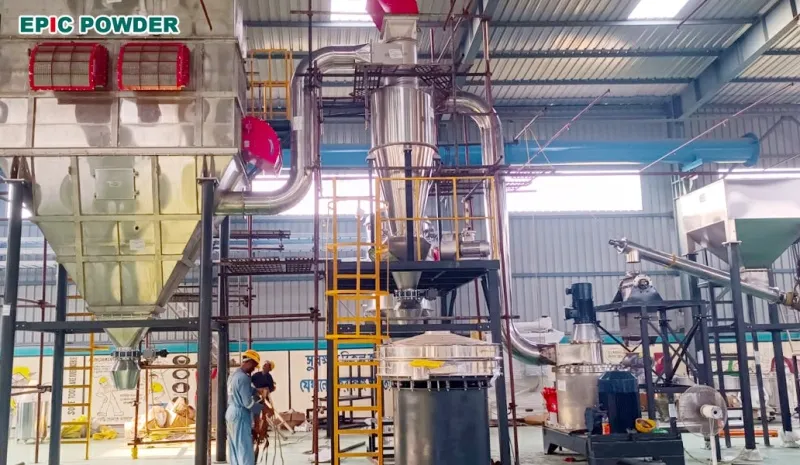
Fluidized Bed Air Jet Milling
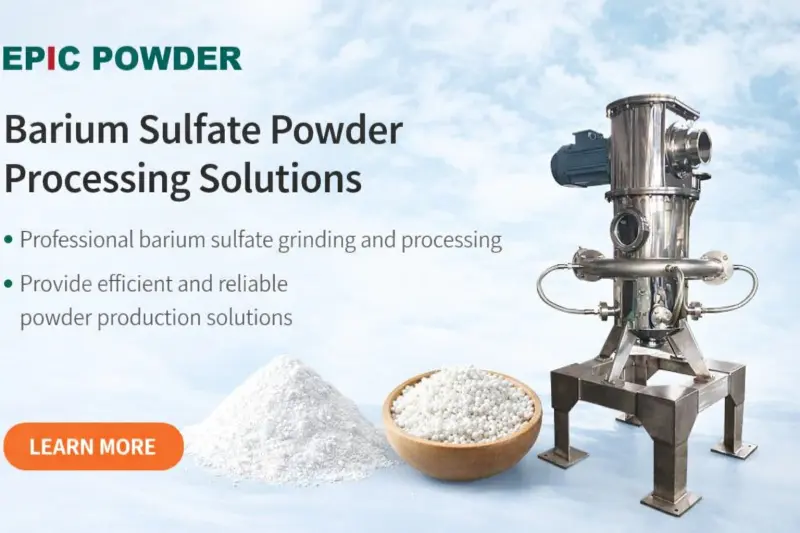
This is currently the mainstream technology for handling the hard agglomeration of ultrafine barium sulfate.
- Physical Mechanism: It utilizes supersonic airflow (above Mach 2) to create a fluidized state for the barium sulfate particles within the milling chamber. Driven by high-energy air streams, particles undergo high-frequency, high-velocity mutual collisions (self-milling).
- Advantages: The collision energy is sufficient to break the chemical “solid bridges.” Since it does not rely on grinding media, product purity is maintained, preserving the brilliant whiteness of the material.
- Integrated Classification: Combined with a high-efficiency turbine classification system, individual particles are quickly discharged once they reach the target size. This prevents over-grinding and ensures a narrow Particle Size Distribution (PSD).
High-Speed Mechanical Impact Milling
For barium sulfate with moderate hardness but severe agglomeration, mechanical impact mills offer higher efficiency.
- Physical Mechanism: A high-speed rotor (with linear speeds exceeding 120 m/s) subjects the material to intense impact, shear, and friction.
- Advantages: It provides high instantaneous energy input and large throughput, making it ideal for large-scale de-agglomeration of coating-grade barium sulfate.
Wet Stirred Media Milling
If the downstream application involves liquid systems like coatings or inks, wet milling is the most thorough option.
- Physical Mechanism: It uses tiny ceramic beads (as small as 0.1 mm) to strike the particles at high frequencies within a liquid medium.
- Advantages: The liquid immediately wets the fresh surfaces of the broken particles, preventing re-agglomeration and achieving true nano-scale dispersion.
III. Technical Breakthrough: Mechanochemistry and Surface Modification
Relying solely on mechanical “brute force” to break hard agglomerates is insufficient. According to “surface energy management” principles, newly created surfaces are highly active and will undergo secondary agglomeration almost instantly.
The cutting-edge path forward is “Milling and Coating Simultaneously”:
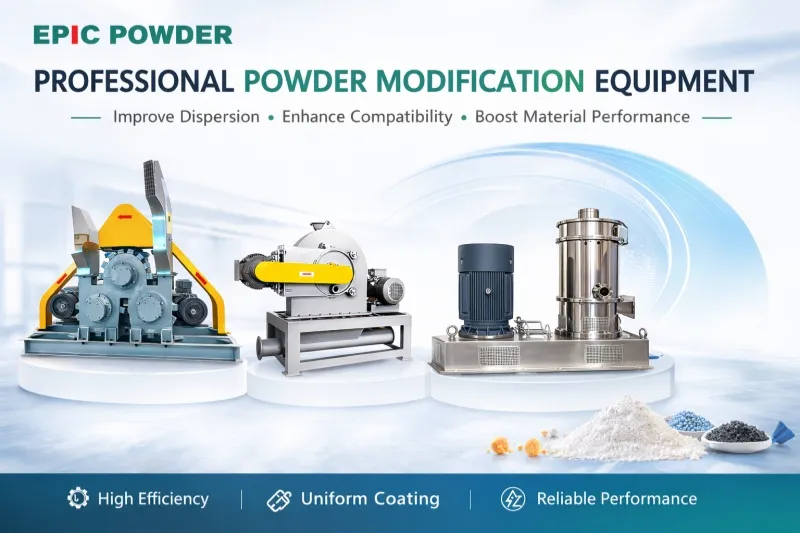
- In-situ Modification: Surface modifiers (such as stearic acid, titanates, or silane coupling agents) are introduced via atomization at the feed inlet of the air jet mill or mechanical mill.
- Physical Encapsulation: The mechanical energy generated during milling activates the sites on the barium sulfate surface. The modifier molecules rapidly spread across the fresh sections, transforming the surface from hydrophilic to lipophilic.
- Steric Hindrance: The modified surface forms a polymer chain film. This layer uses electrostatic repulsion and steric hindrance to ensure particles no longer “stick” together after milling, fundamentally solving the recurrence of hard agglomeration.
IV. Performance Leap After De-agglomeration
Barium sulfate processed through advanced mechanical milling exhibits a significant leap in performance for downstream applications:
- Opacity and Gloss: Uniform particle distribution reduces the disordered scattering of visible light. In automotive coatings, this significantly enhances the mirror-like finish.
- Mechanical Reinforcement: In engineering plastics (e.g., PP/ABS), individual barium sulfate particles free of agglomeration form a strong interface with the resin matrix, acting as rigid toughening agents to increase impact strength.
- Processing Flowability: Breaking hard agglomerates drastically reduces the oil absorption value of the powder. This results in lower system viscosity and better processing performance under the same formulation.
V. Conclusion and Future Outlook
Resolving the hard agglomeration of precipitated barium sulfate is essentially an art of balancing “energy input” and “surface stabilization.” Advanced mechanical milling, particularly air jet milling, provides the physical energy required to shatter hard agglomerates, while simultaneous surface modification “locks in” these results.
In the future, the processing of precipitated barium sulfate will move toward intelligent control and extreme purification. By precisely controlling pressure, temperature, and the atomic-level distribution of modifiers, we can not only break physical clusters but also empower this traditional material with new life in emerging fields such as new energy and semiconductor packaging.

“Thanks for reading. I hope my article helps. Please leave a comment down below. You may also contact Zelda online customer representative for any further inquiries.”
— Posted by Emily Chen