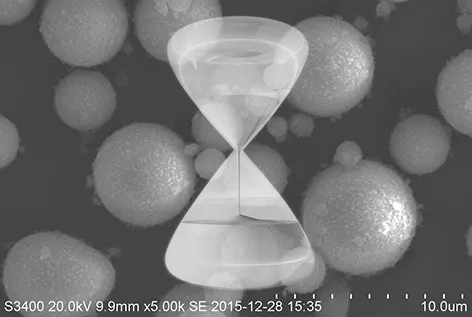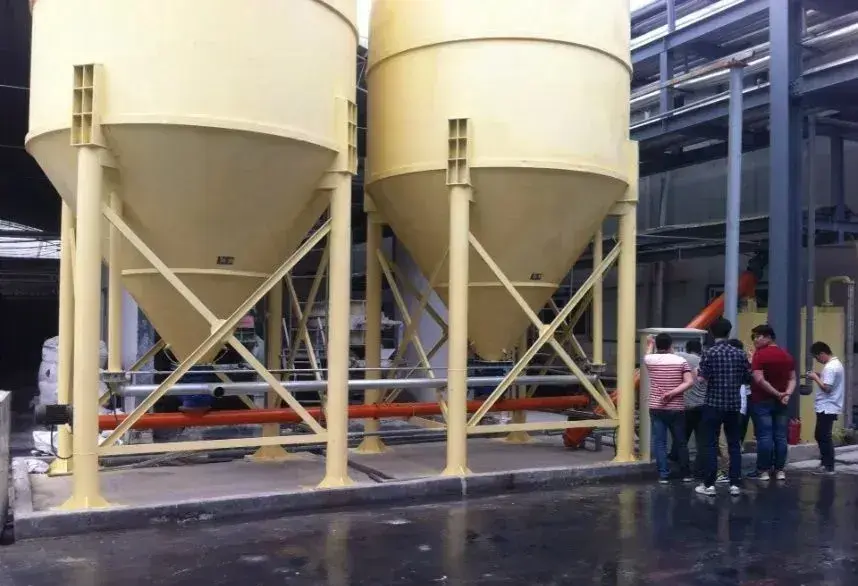
In the context of the global energy transition, Sodium-ion Batteries (SIBs) are becoming highly competitive candidates for large-scale energy storage and light electric vehicles. They offer advantages such as abundant sodium resources, low cost, and stable performance in extreme temperatures. However, the radius of a sodium ion (0.102 nm) is significantly larger than that of a lithium ion (0.076 nm). This difference results in slower insertion and extraction speeds within the cathode lattice. It can also lead to structural distortion. To overcome these kinetic obstacles, precise control over morphology and particle size is essential. Therefore, Sodium-ion Battery Cathode Materials Ultrafine Grinding using an Air Jet Mill is becoming a standard process in the industry. This article explores how air jet milling optimizes performance from physical properties to electrochemical behavior.
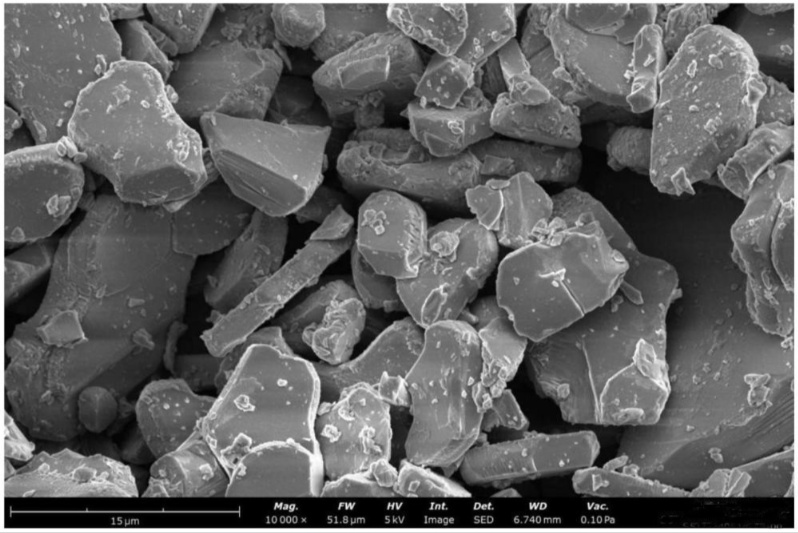
1. Characteristics and Challenges of Sodium-ion Battery Cathode Materials
The mainstream cathode routes for sodium-ion batteries include layered oxides, polyanionic compounds, and Prussian blue analogues. While these materials have unique benefits, they face several common challenges during production:
- Limited Diffusion Kinetics: Due to the large size of sodium ions, the diffusion path within solids is long. This often leads to poor rate performance during high-current charging and discharging.
- Significant Volume Effects: Frequent charging and discharging cause drastic lattice expansion and contraction. This generates micro-(micro-cracks), which reduce cycle life.
- Extreme Sensitivity to Impurities: Metallic elements like iron, nickel, or chromium can trigger self-discharge or safety issues.
- Difficulty in Morphology Control: Processing performance, such as tap density and coating quality, is directly affected by particle shape and Particle Size Distribution (PSD).
2. Working Principle and Technical Advantages of the Air Jet Mill
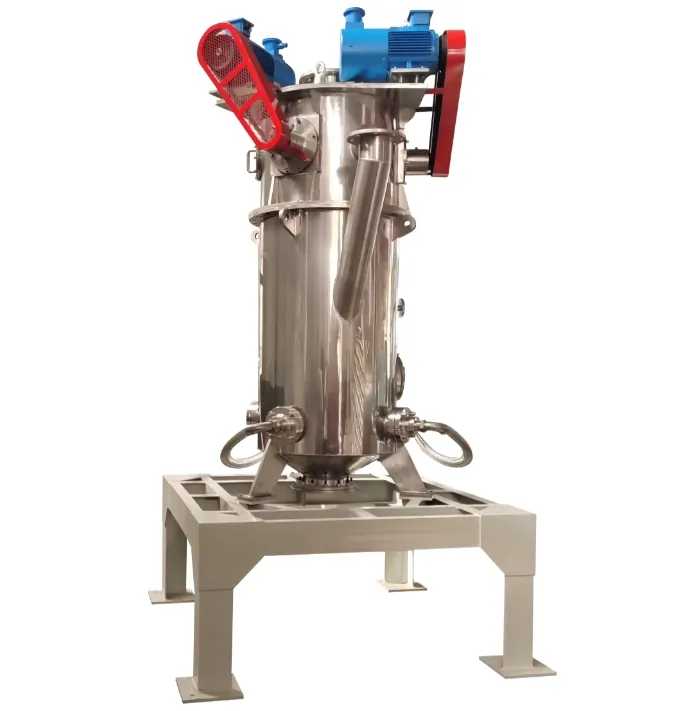
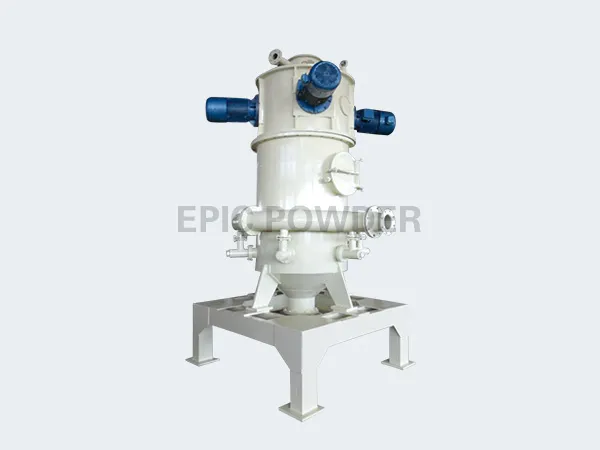
An air jet mill (or fluidized bed jet mill) uses high-speed compressed air or inert gas as a power source. Material particles collide violently with each other in the supersonic airflow. This achieves grinding through high-frequency friction and shear.
High-Precision Particle Size Distribution Control
Air jet mills are equipped with high-efficiency turbo classification systems. By adjusting the speed of the classifying rotor, the upper particle size limit (D90) can be strictly controlled. This ensures a very narrow particle size distribution for the cathode material.
Self-Grinding Mechanism: Zero Metal Contamination
For sodium-ion battery cathodes, metallic debris is fatal. Traditional ball mills inevitably suffer from media wear during long-term grinding. In contrast, an air jet mill relies on “material-on-material” impact. There is minimal collision with the equipment walls. By lining critical parts like nozzles and classifiers with silicon carbide or alumina ceramics, “iron-free” processing is achieved.
Low-Temperature Processing Environment
When air expands at the nozzle, it creates a cooling effect (the Joule-Thomson effect). This offset the heat generated during the grinding process. This is crucial for temperature-sensitive or easily oxidized materials, as it prevents phase changes or material failure.
3. Significant Improvement in Electrochemical Performance
Shortened Diffusion Paths and Improved Rate Performance
According to Fick’s Second Law, the diffusion time of an ion in a solid is proportional to the square of the diffusion distance. Through Sodium-ion Battery Cathode Ultrafine Grinding, materials can be reduced to the micron or sub-micron level (e.g., D50 controlled at 2 – 5μm). Shortening the migration distance allows the battery to maintain high capacity even during high-rate cycles.
Stress Relief and Improved Cycling Stability
Lattice distortion caused by sodium insertion creates stress that accumulates more easily in large particles, leading to fracture. Smaller particles processed via Sodium-ion Battery Cathode Materials Ultrafine Grinding offer better flexibility. They can buffer the volume changes during charging. Furthermore, fine grinding eliminates original defects from synthesis, reducing the initiation of micro-cracks.
Enhanced Electrolyte Wetting and Reaction Area
Fine grinding increases the Specific Surface Area (BET) of the material. A moderate increase in surface area means more effective contact points between the electrode and the electrolyte. This reduces Charge Transfer Resistance (Rct). It not only improves initial Coulombic efficiency but also enhances low-temperature startup performance.
Optimized Coating Performance and Electrode Density
Powders treated by an air jet mill usually have better fluidity and regular shapes. Proper particle size grading can improve coating uniformity on the current collector. This reduces defects like bubbles or missing spots. During the calendering process, it also increases the tap density, which raises the volumetric energy density of the battery.
4. Application Strategies for Different Sodium-ion Systems
Layered Oxides
Layered oxides (such as NaxMO2) have moderate hardness. The focus here is on controlling the “fines” content. Too many ultrafine particles increase reaction with moisture (H2O) and (CO2) in the air, causing surface alkalinity. The precise classification of the air jet mill effectively removes excess fines.
Polyanionic Compounds
Materials like Sodium Iron Phosphate (NaFePO4) or Sodium Vanadium Fluorophosphate (Na3V2(PO4)2F3) have poor conductivity. They usually require carbon coating. The strong shear force of Sodium-ion Battery Cathode Materials Ultrafine Grinding helps carbon nanotubes (CNTs) or conductive graphite adhere better to the material surface, strengthening the conductive network.
Prussian Blue Analogues
These materials have a loose structure and high water content. The dry airflow of the jet mill provides a drying effect during grinding. It also prevents the structure from collapsing, which can happen during mechanical grinding.
5. Optimization for Mass Production
To maximize the efficiency of Sodium-ion Battery Cathode Ultrafine Grinding in industrial production, several parameters must be monitored:
- Feeding Rate: Stable feeding is the prerequisite for particle consistency. Frequency-controlled screw feeders are typically used.
- Grinding Pressure: Generally controlled between 0.7 -1.0 MPa. Higher pressure provides more collision energy for finer products.
- Classification Speed: This is the core parameter for adjusting D90. Faster speeds result in a smaller cut size.
- Inert Gas Circulation: For easily oxidized materials, a nitrogen (N2) closed-loop system is recommended. This keeps oxygen levels below 100 ppm.
6. Conclusion and Outlook
The air jet mill is more than just a grinding machine; it is a “tuner” for the performance of sodium-ion materials. Through Sodium-ion Battery Cathode Materials Ultrafine Grinding, it addresses the pain point of slow sodium diffusion at the kinetic level. Through precise classification, it ensures consistency in mass production. Through ceramic protection, it builds a safety barrier against metal contamination.
As the sodium battery industry moves toward GWh-scale production, requirements will evolve from simple grinding to “morphology engineering.” In the future, intelligent air jet systems integrated with AI will automatically adjust parameters based on real-time data. This will help sodium-ion batteries reach the market with lower costs and superior performance.

“Thanks for reading. I hope my article helps. Please leave a comment down below. You may also contact Zelda online customer representative for any further inquiries.”
— Posted by Emily Chen