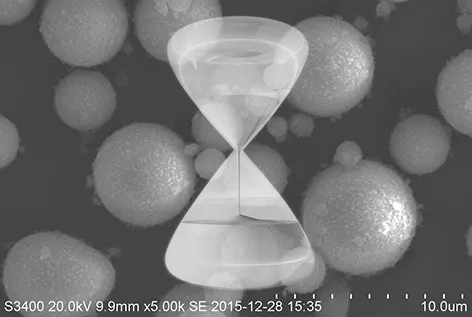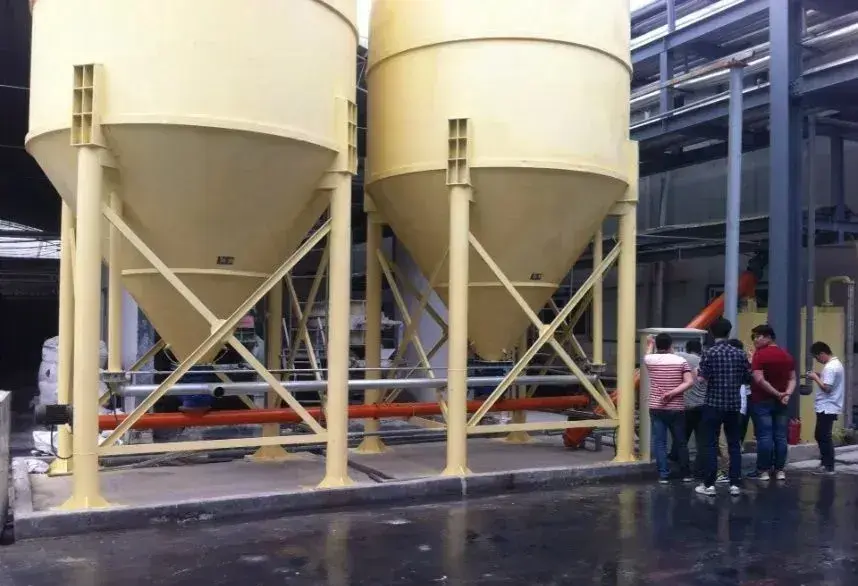
In the field of industrial mineral processing, the ultrafine grinding of hard minerals (such as quartz, feldspar, calcite, zircon sand, silicon carbide, etc.) has always been a core process with extremely high technical requirements. At the same time, it is a critical stage where production costs are concentrated. With the rapid global development of new energy (lithium battery anodes, photovoltaic quartz sand), advanced ceramics, paints and coatings, and new materials industries, market demand for ultrafine powders of hard minerals is growing steadily. For example, D50 can reach 2 μm, and D97 can be controlled at ≤5 μm. However, hard minerals typically possess high Mohs hardness (≥5) and high abrasiveness. During the grinding process, this leads to severe equipment wear, resulting in issues such as metal contamination, soaring energy consumption, and frequent downtime for maintenance. So, how can you select the ultra fine powder grinder best suited for your project from the vast array of equipment available on the global market?
This article will provide an in-depth analysis from five key dimensions:
- Material Properties
- Comparison of Core Models
- Anti-Wear Design
- Classification System
- Overall Return on Investment (ROI)
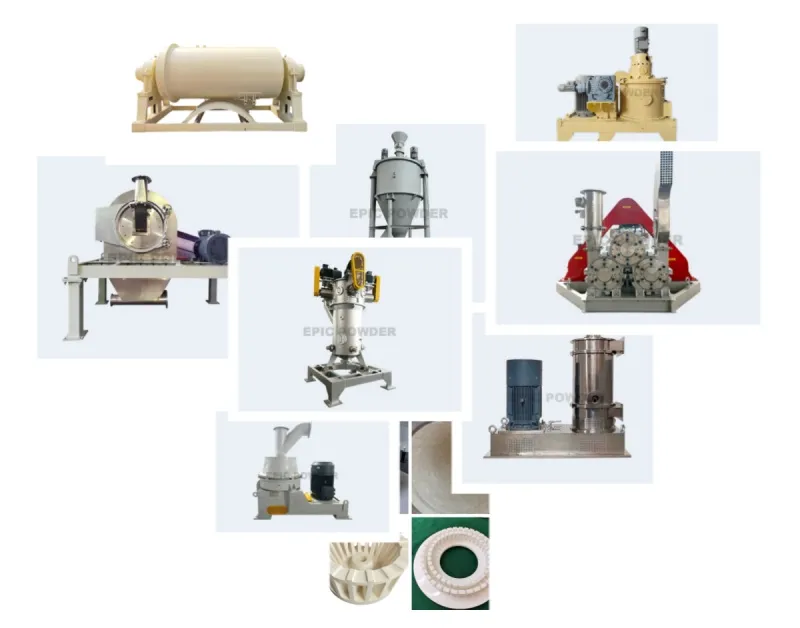
How Do Material Hardness and End-Application Standards Affect Equipment Selection?
Before selecting any grinding equipment, the first priority is to clearly identify the physical properties of the material to be processed and the strict requirements that downstream customers have for the finished product.
The Mohs Hardness Threshold
The Mohs hardness of the material directly determines the choice of grinding mechanism:
Low to medium hardness (Mohs hardness < 4):
Materials such as calcite, talc, and kaolin can be easily processed by most conventional impact mills or ring roller mills.
High hardness (Mohs hardness ≥ 5):
Such as quartz, feldspar, tourmaline, and even harder materials like zirconia and silicon carbide. These materials exert extreme shearing and abrasive forces on metal, so specialized models with high wear resistance and protective features must be selected.
Purity and Particle Size Distribution (PSD)
In addition to hardness, the following factors must also be considered:
Q: Are there restrictions on iron contamination?
A: Lithium-ion battery materials (such as graphite anodes and high-purity quartz) require absolutely zero iron contamination (Fe content controlled at the ppm level).
Q: How narrow must the particle size distribution (PSD) be?
A: Is it necessary to strictly control oversized particles (Dmax) while avoiding ultrafine powders resulting from over-grinding?
Jet Mill vs. Ball Mill Line—Which is Better for Hard Minerals?
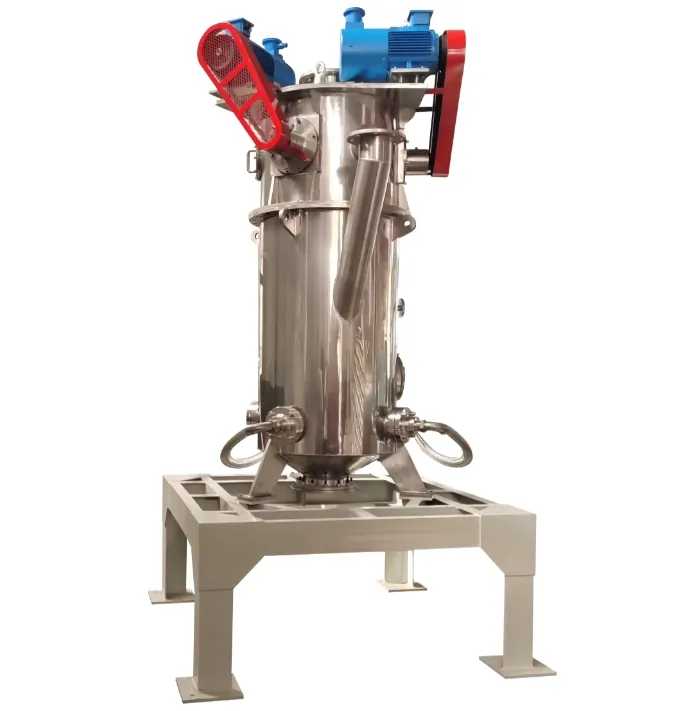
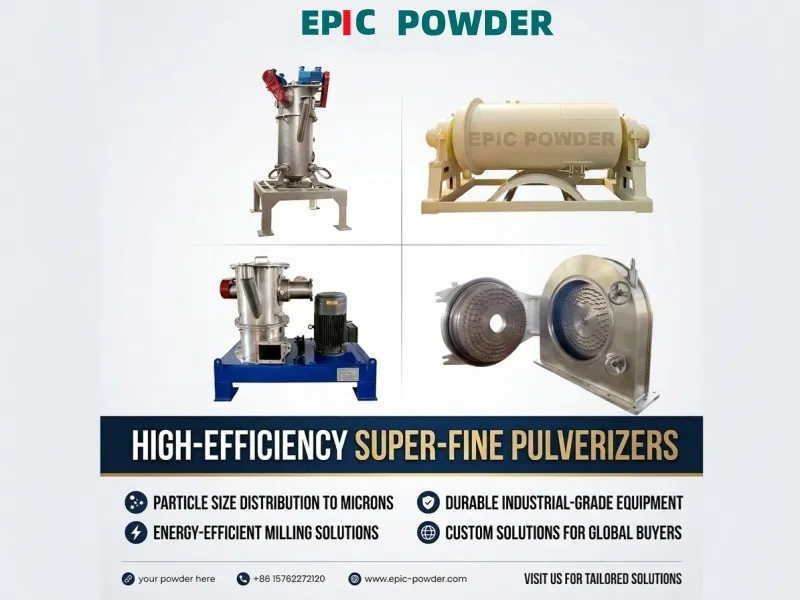
For the dry ultra fine powder grinder of hard minerals, the mainstream solutions in the industry currently focus primarily on jet mills and ball mill + classifier production lines. Both have their own advantages in terms of operating principles and applicable scenarios.
Air-jet mills (primarily fluidized-bed air-jet mills)
The jet mill utilizes high-speed compressed air (or inert gas) passed through proprietary nozzles to create supersonic airflow. The material is violently driven by these gas streams, causing particle-to-particle collisions and friction to achieve size reduction.
Technical Advantages:
Self-grinding Principle: Since the grinding process relies primarily on the material’s own collisions, wear on the equipment’s inner walls is minimized. This makes it highly suitable for materials with extremely high hardness (Mohs hardness 7 or above).
High-Purity Processing: The interior lining can be easily fully ceramicized (alumina, silicon carbide, zirconia) for protection, ensuring zero metal contamination.
Ultra-Fine Particle Size: Easily achieves D50: 1–5 μm with an extremely narrow particle size distribution.
Ball Mill + High-Efficiency Air Classifier Production Line
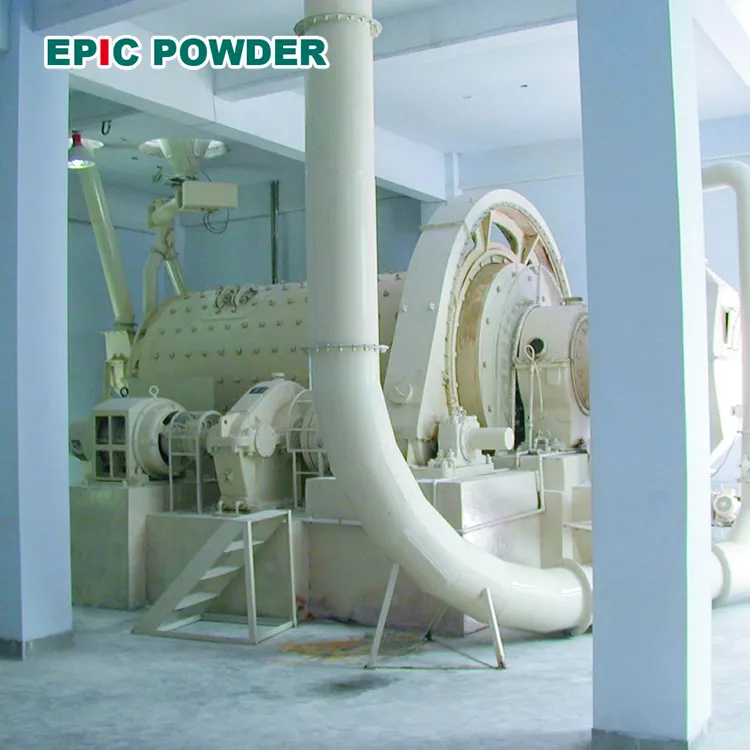
For high-power, industrial-scale hard mineral projects, the ball mill and classifier line is currently recognized globally as the most stable and economical combination. The ball mill uses the rotation of its cylinder to drive grinding media (grinding balls) to continuously impact and grind the material. The output enters the air classifier for closed-circuit classification.
Technical Advantages:
Significant economies of scale: A single production line can achieve a capacity of several to tens of tons per hour (e.g., large-scale quartz and feldspar powder projects with an annual output of 10,000 tons).
Lower energy consumption: When producing finished products of the same particle size and output, the comprehensive power consumption of the ball mill system is significantly lower than that of an air mill.
High continuous stability: The technology is mature and capable of stable, uninterrupted 24-hour operation.
Key Selection Criteria:
Non-metallic linings (such as high-alumina ceramic lining bricks or quartz lining plates) and high-alumina ceramic grinding balls must be used to prevent iron contamination and reduce wear.
What Advanced Anti-Wear Upgrades Are Required for Abrasive Grinding?
When processing hard minerals, equipment lifespan is directly tied to company profits. If wear protection is poorly engineered, an ultra fine powder grinder can easily wear through its hammers, blades, or liners in just a few hundred hours, stopping production completely.
During your equipment evaluation, pay close attention to whether the manufacturer uses premium materials for these high-wear zones:
| Core Component | Traditional Material (Not Recommended for Hard Minerals) | Premium Upgrade Alternative | Core Benefits Delivered |
| Classifier Wheel | Standard alloy steel / Manganese steel | Solid monolithic alumina or silicon carbide ceramics | Resists high-speed abrasive scouring; extends wheel lifespan by several times; ensures zero iron contamination. |
| Grinding Chamber Liner | Metal wear plates | Wear-resistant ceramic tiles / Integrated ceramic liners | Prevents raw material from ever making contact with the metal frame, protecting powder whiteness and purity. |
| Pipes & Elbows | Carbon steel piping | Ceramic-lined composite pipes / Polyurethane linings | Solves the common issue of pipe puncture caused by high-velocity particle impacts at directional turns. |
| Discharge Valves & Cyclones | Standard butterfly valves / Stainless steel | Ceramic rotary valves / Ceramic anti-wear cyclone liners | Maintains critical airtightness and wear resistance over extended, uninterrupted production runs. |
Why is the Air Classification System Critical for Quality Control?
“Grinding relies on the main unit; fineness depends on classification.” In the production of ultrafine powders, simply crushing the material is not enough. The key lies in how to accurately extract the micro-powder that meets the specifications.
When selecting a classification system for hard minerals, consider the following:
High-precision multi-impeller classifier:
If your project requires both high throughput and strict control of the cut point (e.g., D97 ≤ 5 μm), a single-impeller classifier is often unable to meet these requirements due to limitations in critical linear velocity. In such cases, a multi-stage classifier with synchronized impeller control should be selected to ensure the stability of the entire flow field.
Dynamic Balancing and Rotational Speed of the Classifier Impellers:
When grinding hard minerals, the classifier operates at extremely high speeds. A high-quality impeller design and rigorous dynamic balancing effectively prevent machine vibration under heavy loads and extend bearing life.
How Do You Calculate the Real ROI and Total Life-Cycle Costs?
Many buyers tend to focus solely on the “initial equipment quote” when making purchases, which can easily lead to misunderstandings in the field of hard mineral processing.
When making a decision, consider asking the equipment supplier the following three key questions:
- What is the total power consumption per ton of finished product? (Compare the exact kWh-per-ton metrics between a ball mill line and a jet mill when processing your target material, like quartz, to D50: 5μm).
- What is the expected operating life (in hours) of core wear parts? What are the exact costs and time required for a replacement cycle?
- Can you provide verified case studies and long-term operating data from an active installation running identical hard minerals?
Conclusion
Selecting the right ultra fine powder grinder for grinding hard minerals is not simply a matter of choosing the machine with the “highest power” or the “highest price.” Rather, it involves finding the optimal balance between material hardness, product purity (free of iron contamination), target particle size distribution (PSD), and production capacity.
- For high-value-added, ultra-pure, ultra-fine materials (D50 ≤ 3 μm), such as high-purity quartz and lithium-ion battery cathode and anode materials, a fluidized-bed air-jet mill with full ceramic protection is the more ideal choice.
- For large-scale, industrial-scale mineral processing that prioritizes the best cost-performance ratio (such as paint-grade feldspar powder or construction-grade silica powder with an annual output of 10,000 tons), a ball mill + air classifier production line should be the preferred option.
Select a professional, established manufacturer with extensive experience in processing hard minerals and capable of providing customized wear-resistant solutions (such as Epic Powder). Conduct preliminary pilot tests with actual feed material. This is the most reliable approach to ensuring successful project commissioning and achieving long-term profitability.
“Thanks for reading. I hope my article helps. Please leave a comment down below. You may also contact Zelda online customer representative for any further inquiries.”
— Posted by Emily Chen