In the world of industrial mineral processing, silica (precipitated and fumed silica) stands out as one of the most versatile functional fillers. From reinforcing high-performance “green tires” to optimizing the rheology of silicone rubber, coatings, and adhesives, silica’s potential is vast. However, untreated synthetic silica is highly hydrophilic (water-loving) and prone to severe agglomeration due to the abundance of silanol (-Si-OH) groups on its surface.
To fully realize its potential as a reinforcing filler, silica must undergo surface modification. Modifiers such as silane coupling agents, silicone oils, or stearic acid are typically used to transform it into a highly dispersible hydrophobic material. When setting up a silica surface modification production line, engineers and plant managers face a critical choice regarding the process route. Should they choose an intermittent or continuous modifier? This comprehensive analysis evaluates both systems to help you determine which technology aligns with your production goals, material characteristics, and ROI targets.
Understanding the Mechanics: Batch vs. Continuous
To make an informed choice, we must first look at how these two systems handle the delicate process of silica modification.
The Batch Coating Process
In a batch modification system, a predefined volume of silica powder is loaded into a mixing chamber. The modifiers (such as silane) are injected, and the material is processed under specific temperature, time, and shear conditions. Once the cycle is complete, the entire batch is discharged, and the process repeats.
- Key Advantage: Precision control over retention time. Every particle stays in the chamber for the exact same duration.
- Key Limitation: Discontinuous flow, high labor or automation overhead for cycle management, and potential batch-to-batch quality variances.
The Continuous Coating Process
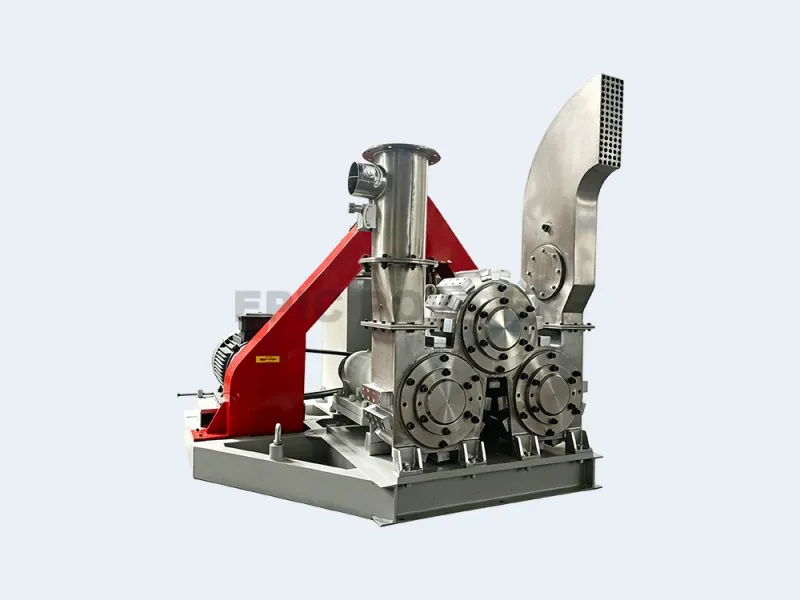
The continuous modification system operates like a flowing river. Raw material silica powder is continuously metered and fed into the system via a weight-reducing feeder. Simultaneously, liquid modifier is precisely injected through a high-precision metering pump. The modifier utilizes the mechanical and thermal energy generated by its high rotation speed to modify the powder online in the “instantaneous” moment it passes through the chamber, and then continuously discharges the finished product.
- Key Advantage: High throughput, fully automated, massive energy savings, and highly uniform product quality over long runs.
- Key Limitation: Requires sophisticated feeding and dosing control systems to prevent fluctuations in the powder-to-liquid ratio.
Head-to-Head Comparison: The Silica surface Modification Matrix
Silica is a notoriously tricky material to process. It has an ultra-low bulk density, a massive specific surface area, and high moisture-absorption tendencies. Let’s compare how batch and continuous coating machines handle these unique challenges across five critical dimensions.
Coating Uniformity and Surface Energy Consistency
Because silica has a vast surface area (often ranging from 100 to over 300 m²/g), achieving a 100% uniform monolayer coating of silane is incredibly difficult.
- Batch Mixer: While it offers strict control over the reaction clock, the low bulk density of silica means it tends to fluidize and float in a large batch chamber. Achieving uniform shear throughout a massive 1000-liter batch can be challenging, sometimes leading to localized “over-coating” or untreated dead zones.
- Continuous Modification System: High-efficiency continuous systems (such as multi-rotor continuous coating machines) utilize a high-speed pin or paddle configuration that creates a highly turbulent, thin-layer vortex. The silica powder and atomized modifier are forced into high-frequency collisions instantly. This ensures an ultra-uniform coating layer on every single particle, maximizing the hydrophobic activation index.
Thermal Efficiency and Moisture Control
Silane modification of silica is a temperature-sensitive chemical reaction that often requires the driven-off of moisture and byproducts (like ethanol or methanol) formed during hydrolysis.
- Batch Systems: Heating up a massive static or slow-moving mass of silica takes time. Heat transfer is inefficient because powder is a poor thermal conductor. This results in longer cycle times and higher energy bills.
- Continuous Systems: In a continuous machine, a relatively small amount of powder passes through the heating zone at any given micro-second. The high-speed vortex maximizes particle-to-wall and particle-to-air heat transfer. Moisture and reaction volatile byproducts are sucked out continuously via an integrated negative-pressure dust collection system, accelerating the silane-silica coupling reaction.
Footprint and Production Capacity
- Batch Systems: To achieve high annual capacities (e.g., 10,000 tons/year) with a batch system, you either need massive, building-sized mixers or multiple batch lines running in parallel. This exponentially increases your factory footprint, civil engineering costs, and piping complexity.
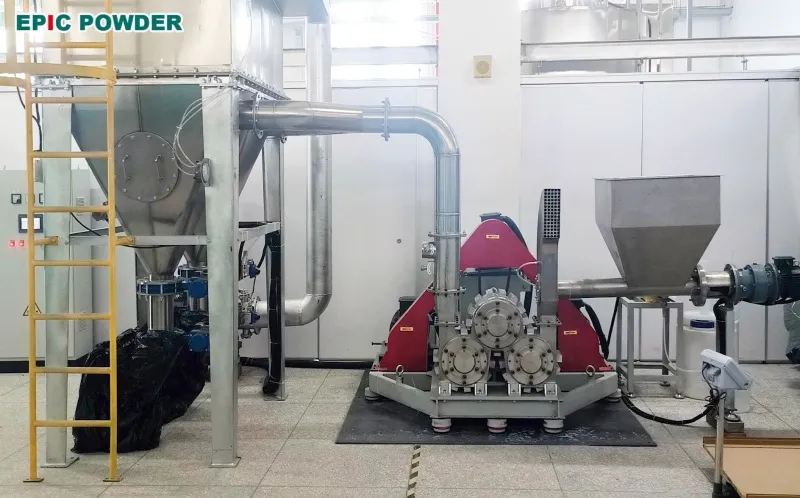
- Continuous Systems: A compact, continuous modification machine can handle 3 to 10 tons per hour (depending on the bulk density of the silica). Because it never needs to be stopped for loading or unloading, this continuous system, with a volume only a fraction of that of an intermittent system, easily surpasses it in output. This saves valuable floor space for the plant.
| Feature / Metric | Batch Coating Machine | Continuous Coating Machine |
| Throughput / Capacity | Low to Medium (Intermittent) | High to Ultra-High (Constant) |
| Footprint | Large (Requires space for loading/unloading) | Compact and vertical-friendly |
| Labor Intensity | Higher (Frequent monitoring/switching) | Low (Fully automated, continuous PLC control) |
| Material Flexibility | Excellent for small, frequent recipe changes | Best for large-scale single-grade production |
| Energy Consumption | Higher (Constant heating/cooling cycles) | Lower (Maintains a steady thermal equilibrium) |
Deep-Dive Q&A: Critical Engineering Challenges Solved
To further clarify the operational nuances of silica surface treatment, let us address two of the most frequently asked questions by global technical directors when evaluating these systems.
Q1: How do batch and continuous systems differ in deagglomerating ultrafine silica during surface modification?
Answer: This is arguably the most critical technical bottleneck in silica processing. Silica particles do not exist as isolated spheres; they naturally form tight aggregates and agglomerates due to strong hydrogen bonding and Van der Waals forces. If you coat an agglomerate, only the outer shell gets treated. When the buyer later compounds this silica into rubber, the agglomerate breaks open, exposing untreated, hydrophilic cores. This destroys the dispersion rating and causes defects in the final rubber product.
- The Batch Limitation: Most batch mixers rely on macro-mixing. They move large masses of powder around. While some are equipped with high-speed choppers, the probability of every single agglomerate passing through those tiny choppers is statistically low. Consequently, batch-modified silica often suffers from sub-optimal dispersion performance in silicone rubber or plastics.
- The Continuous Solution: A dedicated continuous coating machine acts simultaneously as a deagglomerator and a coater. The high-speed mechanical rotors generate intensive impact, shear, and attrition forces. As the silica enters the chamber, the mechanical energy instantly tears the agglomerates apart into primary aggregates. At that exact millisecond, the liquid modifier is atomized into the chamber. The fresh, exposed surface areas of the silica are coated instantly before they have a chance to re-agglomerate. This results in a vastly superior dispersion rating (D50 stability) in downstream applications.
Conclusion
For modern, world-class silica processing plants, the industry is shifting decisively toward Continuous Coating Systems. The continuous system combines real-time deagglomeration, impeccable thermal efficiency, and steady, automated output. This makes it the superior choice for high-volume, high-quality surface-treated silica. By investing in the right continuous surface modification technology, manufacturers can ensure flawless dispersion and compatibility. As a result, their silica products will easily meet the strict demands of high-end global buyers.

“Thanks for reading. I hope my article helps. Please leave a comment down below. You may also contact Zelda online customer representative for any further inquiries.”
— Posted by Emily Chen