초미세 분쇄기를 사용하여 철계 분말의 입자 크기를 100미크론으로 정밀하게 제어하는 방법은 무엇일까요?

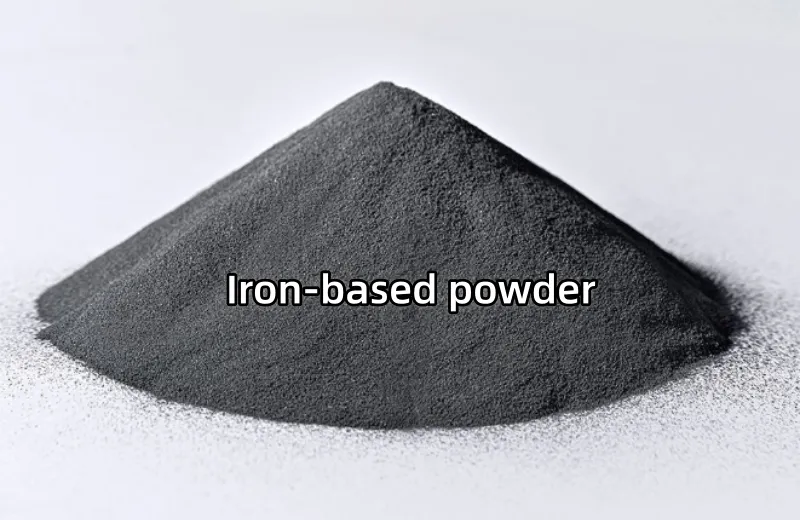
Iron-based powders are available in various types, each designed to meet specific industrial requirements. Among these, the iron-based powder ultrafine pulverizer stands out, enabling the production of ultra-fine powders ideal for high-precision applications.

Powder TypeDescriptionCommon Uses
Pure Iron PowderHigh-purity iron, often electrolytic or atomizedPowder metallurgy, magnetic materials
Reduced Iron PowderProduced by reducing iron oxidesSintered parts, magnets
Atomized Iron PowderMade by high-pressure gas or water atomizationAdditive manufacturing (3D printing), diamond tools
Iron Alloys PowderIron mixed with elements like nickel or chromiumSpecialized alloys, battery components

Particle Size: The D50 Standard

Achieving the right particle size is critical. The D50 metric (median particle diameter) is commonly targeted to ensure:

  • Optimized flowability
  • Improved sinterability
  • Consistent chemical reactivity

For iron-based powders, a narrow particle size distribution with a D50 of around 100μm or finer is often required. This precision supports better packing density and performance in end applications.

Applications Driving Ultrafine Iron-based Powder Demand

Several industries fuel the need for ultrafine iron powder grinding:

  • 분말 야금: High-strength sintered parts demand uniform, fine powders.
  • Lithium Iron Phosphate Batteries: Ultrafine powders improve energy density and charge rates.
  • Magnetic Materials: Precise particle size enhances magnetic performance.
  • Diamond Tools: Fine iron powder serves as a matrix for diamond bonding.
  • Additive Manufacturing (3D Printing): Requires uniform, flowable metal powders for precision builds.

Understanding these powder types and size requirements is the first step toward selecting the right ultrafine pulverizer for iron-based metals.

Challenges in Grinding Iron-Based Powder

Grinding iron-based powders comes with unique challenges due to their ductility and toughness. These properties often cause smearing or agglomeration during processing, making it tough to get a consistent, ultrafine particle size. Additionally, iron powders are prone to oxidation and contamination, especially when exposed to heat buildup during milling. This can degrade powder quality and affect performance in sensitive applications like lithium iron phosphate batteries or powder metallurgy.

Traditional grinding methods, such as ball mills and hammer mills, struggle to deliver the required ultrafine iron powder grinding results. These mills often generate excessive heat and fail to control particle size precisely, leading to wide distributions and contamination risks. Achieving a controlled D50 particle size iron powder with narrow distribution using conventional equipment is challenging—making ultrafine pulverization technology essential for high-purity iron powder milling.

How Ultrafine Pulverizers Work for Iron-Based powder ?

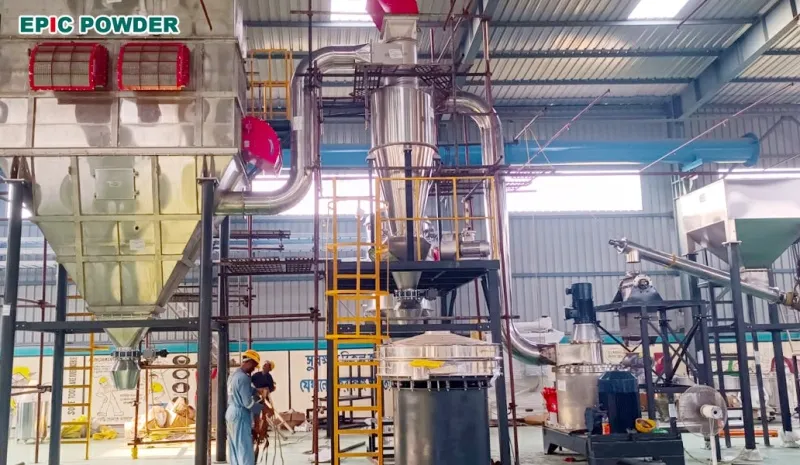
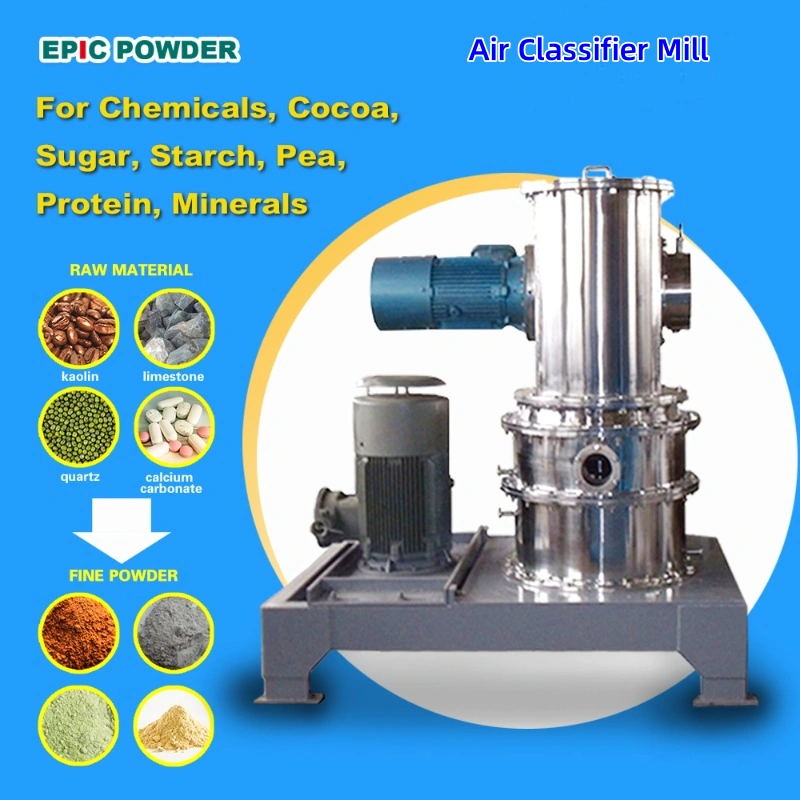
Ultrafine pulverizers for iron-based powders mainly use advanced technologies like air classifier mills, jet mills, and integrated grinding-classification systems. These machines are designed to deliver precise, consistent particle sizes essential for high-quality iron powder applications.

Here’s how the process typically works:

  • Feeding: The iron powder is fed into the mill in a controlled manner, ensuring steady flow and uniform grinding.
  • High-speed impact and shear: Inside the mill, particles undergo rapid impact and shear forces. In air classifier mills, the rotor spins at high speed, smashing and breaking particles down to ultrafine sizes.
  • Dynamic classification: A built-in classifier continuously separates fine particles from coarser ones, allowing only the correctly sized powder to pass through. This dynamic air classification helps maintain a narrow particle size distribution and targeted D50 values, often down to 100μm or smaller.
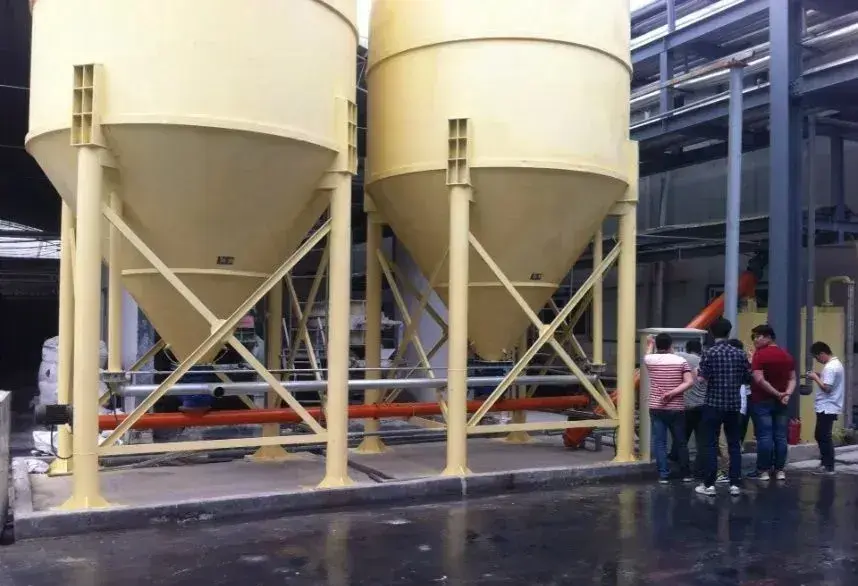
  • Collection: Finally, ultrafine powder is collected in a cyclone or filter system, preventing contamination and dust release.

Airflow plays a crucial role throughout the process. It acts as a cooling agent to prevent heat buildup that could cause oxidation or changes in powder quality. The airflow also helps carry the particles through the mill and classifier, ensuring precise control over particle size and effective contamination-free grinding.

For more insights on ultrafine grinding technology and air classifier mill advantages, check out this detailed look at ultrafine grinding in food processing, which illustrates similar principles applied across industries.

Key Features of Epic Powder’s 공기 분류기 밀 for Iron-Based Powders

Air Classifier Mill900 Production Line

Epic Powder’s 공기 분류기 밀(ACM) is engineered specifically for ultrafine iron powder grinding, offering several standout features for reliable, high-purity metal powder production:

특징Description
Contamination-Free DesignUses ceramic liners and optional inert gas grinding to prevent oxidation and impurities during milling.
Precise Particle ControlAdjustable classifier allows targeting a D50 particle size as fine as 100μm or below, ensuring narrow particle distribution.
High Energy EfficiencyOptimized for low power consumption  with maximum output yield, reducing operational costs.
Durable ConstructionBuilt to withstand abrasive wear typical in iron-based powder processing , ensuring long-term reliability.

By combining these features, Epic Powder’s mill guarantees fine iron-based powder processing with enhanced purity and consistency. The adjustable classifier system  plays a key role, offering precise control to meet specific particle size requirements vital for applications like powder metallurgy and lithium iron phosphate batteries.

For more on how ultrafine grinding improves material properties, see our guide on the applications of ultrafine pulverizer machinery in lithium-ion battery electrode processing.

Technical Specifications and Performance Data

Epic Powder’s air classifier mill (ACM) delivers impressive results for ultrafine iron powder grinding, balancing capacity, power use, and particle size control for diverse industrial needs.

SpecificationEpic Powder ACMConventional Ball Mill
Capacity Range50 – 1000 kg/hr20 – 500 kg/hr
Power Requirement15 – 75 kW30 – 100 kW
Achievable Fineness (D50)Down to 10 – 100 μmTypically > 100 μm
입자 크기 분포Narrow, tight controlBroad, variable
Purity & ContaminationHigh purity, contamination-free (ceramic liners, inert gas)Risk of contamination
Throughput EfficiencyHigh throughput, consistent outputModerate throughput

Real-World Performance Examples

  • D50 Precision: Epic Powder’s air classifier mill consistently achieves a uniform D50 particle size of 100 μm and finer, essential for applications like lithium iron phosphate batteries and powder metallurgy.
  • Energy Efficiency: Compared to traditional ball or hammer mills, Epic Powder’s ACM uses less power while maintaining finer particle grinding.
  • Consistent Quality: Ideal for producing high-purity iron powders  with minimal oxidation, backed by controlled airflow that prevents heat buildup during grinding.

For detailed applications in fine metal powder processing and process optimization, consider reviewing case studies on powder metallurgy milling solutions, which highlight how ultrafine pulverization improves product quality and throughput.

Epic Powder’s technical edge in ultrafine pulverization means less waste, better particle uniformity, and more efficient operations — critical factors for demanding industries working with iron-based powders.

Selection Guide: Choosing the Right Ultrafine Pulverizer

ultrafine pulverizer

When selecting an ultrafine pulverizer for iron-based powder, several factors come into play to ensure optimal grinding performance and product quality.

Key factors to consider:

  • Material properties: Iron powders vary in ductility and hardness. Ultrafine iron-based powder grinding requires a mill that can handle tough, ductile materials without causing smearing or agglomeration.
  • Desired fineness: Depending on the application, particle size targets like D50 around 100μm or finer are common. Look for pulverizers with adjustable classifiers to achieve narrow particle size distribution.
  • Production scale: High-volume manufacturing demands equipment with sufficient capacity and consistent output, while smaller-scale operations might prioritize flexibility.
  • Purity needs: Contamination risks from metal parts or heat buildup must be minimized. Sealed systems and options like ceramic liners or inert gas grinding help maintain high-purity iron powder milling.

에픽 파우더’s air classifier mill stands out because it combines all these attributes in a single platform. Its contamination-free design, precise control over particle size, and energy-efficient operation make it ideal for ultrafine iron powder grinding. Whether you’re processing materials for powder metallurgy, lithium iron phosphate batteries, or magnetic materials, Epic Powder can deliver the consistent, high-quality powder characteristics you need.

For more details on grinding solutions tailored to sensitive materials, explore how spiral jet mills provide precise and contamination-free processing.


Emily Chen

읽어주셔서 감사합니다. 제 글이 도움이 되셨으면 좋겠습니다. 아래에 댓글을 남겨주세요. 추가 문의 사항은 젤다 온라인 고객 담당자에게 연락하실 수도 있습니다.

— 게시자 에밀리 첸
    다음을 선택하여 인간임을 증명하세요. 마음.

    위로 스크롤