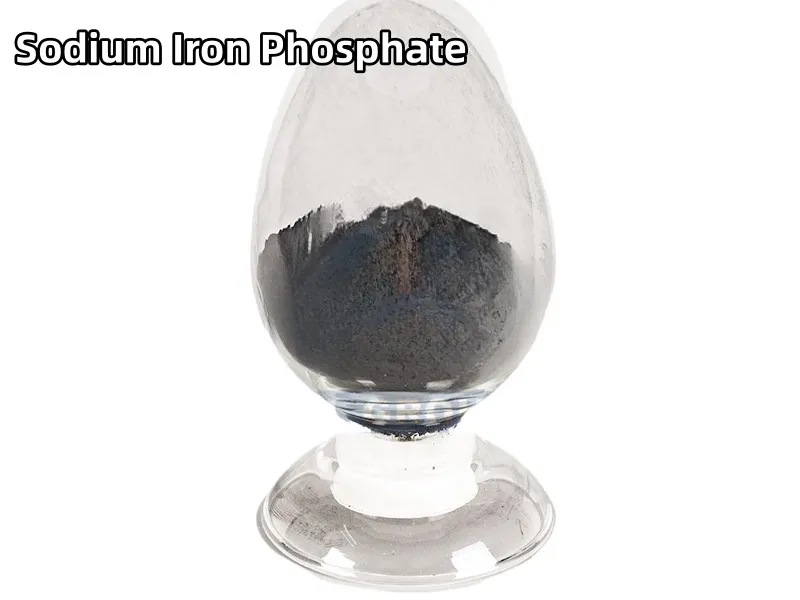
What Is Sodium Iron Phosphate ?

Sodium iron phosphate refers to a class of compounds containing sodium (Na), iron (Fe), phosphorus (P), and oxygen (O). In chemistry and materials science, this term can represent several different compounds.
At present, the term “sodium iron phosphate” most commonly refers to the following two meanings:

Sodium Iron Phosphate in the Narrow Sense (NaFePO₄, NFP)

This is the compound that most directly corresponds to the literal name.
Its chemical formula is NaFePO₄ , and its crystal structure is similar to the well-known lithium iron phosphate (LiFePO₄, LFP).

Sodium Iron Phosphate in the Broad and Industrially Relevant Sense

Polyanionic / Composite Sodium Iron Phosphate Materials

In particular, sodium iron pyrophosphate phosphate, with the formula
Na₄Fe₃(PO₄)₂P₂O₇ (commonly abbreviated as NFPP or NFPP-4.0), is currently regarded as one of the most promising iron-based cathode materials for sodium-ion batteries.

In the sections below, we focus primarily on NFPP, as it is the form of “sodium iron phosphate” that has truly entered large-scale production and commercial discussion in both industry and academia.

Basic Properties and Structural Characteristics

  • Chemical formula: Na₄Fe₃(PO₄)₂P₂O₇ (most common form)
  • Crystal structure: Polyanionic framework structure
    • Built from [PO₄] tetrahedra and [P₂O₇] pyrophosphate units
    • These units form a three-dimensional open framework
    • FeO₆ octahedra are connected via shared corners and edges
  • Appearance: Typically white or light-colored powder (depending on synthesis process)
  • Theoretical specific capacity: ~129–130 mAh/g
    • Optimized materials can approach or reach the theoretical value
  • Average discharge voltage: ~3.1–3.2 V (vs. Na/Na⁺)
  • Energy density: Up to ~400 Wh/kg at the material level (with optimized formulation)

This three-dimensional framework provides excellent structural stability.
During charge–discharge cycling, volume change is very small (typically <5%), resulting in outstanding cycle life and thermal stability.


Key Advantages (Why Is NFPP Highly Regarded?)

パラメータNFPP (Sodium Iron Pyrophosphate Phosphate)Typical Layered Sodium Cathodes (e.g. NaNiMnO₂)リン酸鉄リチウム(LFP)
Raw material costVery low (no Ni, Co, Cu, or other expensive metals)Medium to highLow
SafetyExcellent (polyanionic structure, very difficult oxygen release)ModerateExcellent
Cycle lifeOutstanding (2,000–6,000+ cycles commonly reported)Moderate to goodExcellent
Low-temperature performanceExcellent (maintains high capacity at −20°C to −40°C)PoorModerate
High-rate / fast-charging capabilityExcellent (≥5C with >80% capacity retention)GoodModerate to good
Voltage plateau~3.1 V, relatively flatHigher but multi-plateau~3.2 V
Practical energy densityMedium (140–160 Wh/kg at cell level)HigherMedium to relatively high

In summary:
NFPP combines nearly all the characteristics most desired for energy storage—high safety, long lifespan, low cost, and wide operating temperature range—making it one of the closest iron-based sodium cathode materials to an “ideal” solution for large-scale energy storage.

Main Application Areas (2025–2026 Status)

  • Large-scale energy storage systems
    (grid-side, commercial & industrial storage, wind and solar storage) — currently the primary application
  • Telecom base station backup power and UPS systems
  • Low-speed electric vehicles and electric two-wheelers (as a replacement for lead-acid batteries)
  • Starting/stop-start batteries, power tools, and other applications where energy density is less critical but cost, safety, and cycle life are highly important
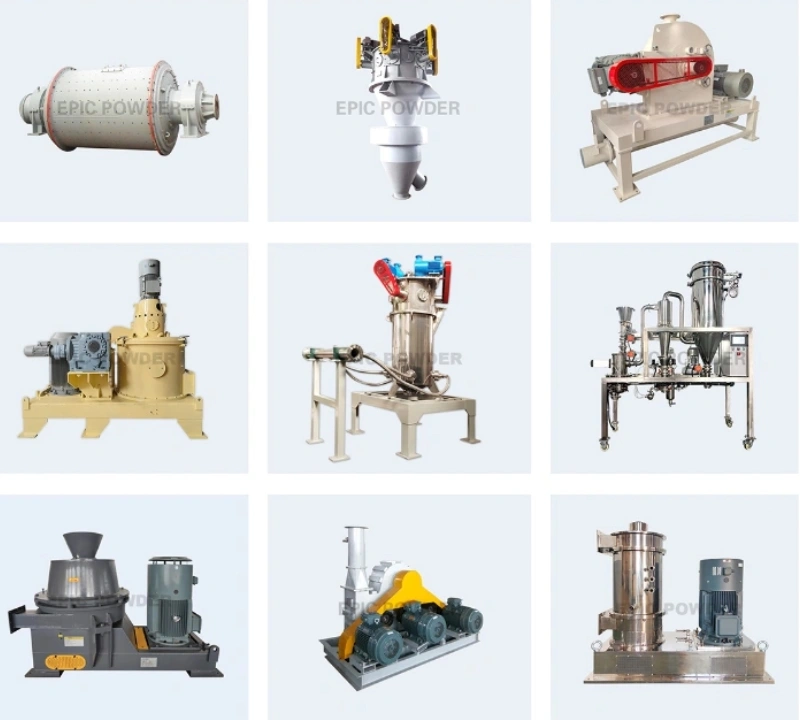
Superfine Grinding Equipment
超微粉砕装置

Current Technical Challenges

  1. Initial Coulombic efficiency and practical capacity still have room for improvement, especially after scaling to kilogram-level production.
  2. Low electronic conductivity, requiring carbon coating or nanoscale engineering.
  3. Relatively low tap density, which limits cell-level energy density compared with layered oxide sodium cathodes.
  4. Incomplete ecosystem maturity, as electrolytes, anodes, and full-system processes are still evolving rapidly.

結論

In the context of 2026, the term “sodium iron phosphate” most often refers to sodium iron pyrophosphate phosphate (NFPP)—an iron-based polyanionic cathode material specifically designed for sodium-ion batteries.

With extremely low cost, outstanding safety, and ultra-long cycle life, NFPP is widely regarded as one of the most promising cathode technologies for large-scale energy storage.
Over the next 5–10 years, it is expected to challenge—and in some applications partially replace—lithium iron phosphate (LFP).

In one sentence:

Sodium iron phosphate (NFPP) is the “safe, low-cost, ultra-long-life” heart of next-generation energy storage batteries, built from the most abundant elements on Earth: sodium and iron.


Emily Chen

読んでいただきありがとうございます。この記事がお役に立てれば幸いです。ぜひ下のコメント欄にご意見をお寄せください。また、ご質問等ございましたら、Zeldaのオンラインカスタマーサポートまでお問い合わせください。

— 投稿者 エミリー・チェン
    あなたが人間であることを証明するために、

    上部へスクロール