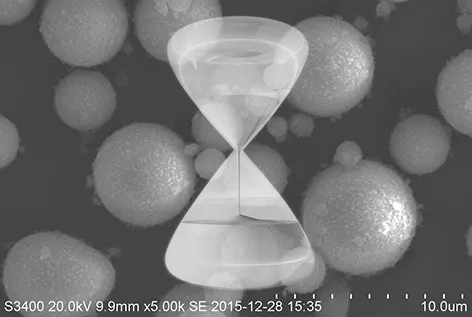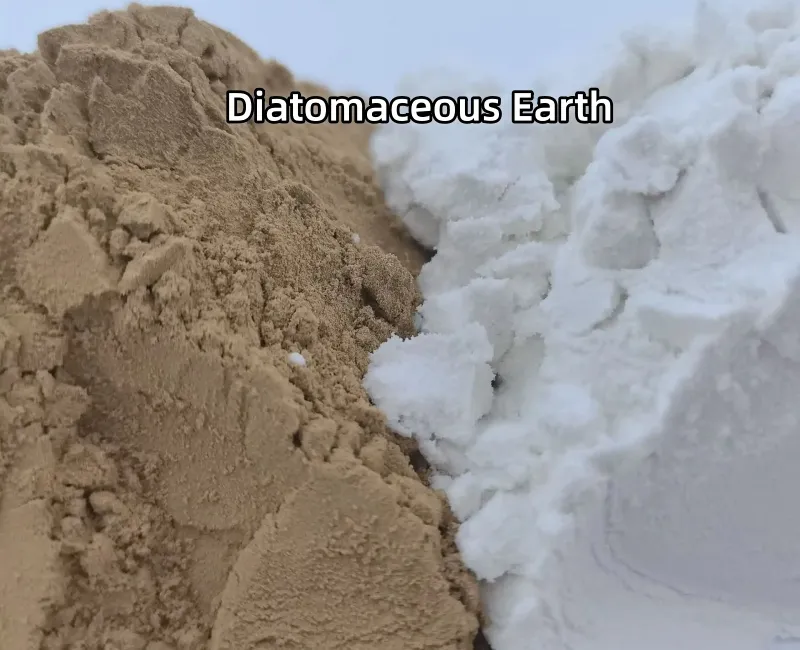
Diatomaceous Earth (DE), also known as diatomite or diatom mud, is a porous, lightweight, silica-rich sedimentary rock formed from the fossilized remains of ancient diatoms. Thanks to its extremely high porosity (80–90%), large specific surface area, low density, superior adsorption capacity, and excellent thermal/chemical stability, DE is widely used in premium coatings (especially matte architectural coatings), beer filtration, functional fillers, catalyst carriers, and more—driving a growing demand for efficient and precise Diatomaceous Earth ultrafine grinding technologies.
However, to unlock its full performance potential, diatomaceous earth typically needs to be ground to D90 ≤ 5–10 μm or even D97 ≤ 2–3 μm . Achieving such fineness is significantly more difficult than processing talc, GCC, or kaolin.

Major Challenges in Ultrafine Grinding of Diatomaceous Earth
Despite advances in ultrafine powder technologies, the unique physical properties of DE pose substantial challenges to industrial-scale grinding:
Low Bulk Density & Pneumatic Conveying Difficulties
- Challenge:
DE has extremely low bulk density and high surface area. During pneumatic conveying or classification, the powder tends to “fly off” or be carried away , leading to material loss and increased dust-handling requirements. - 解決:
Design low-velocity, high-airflow conveying systems and optimize classifier structures to reduce the drag effect on ultrafine particles.
Structural Damage & Loss of Functional Properties
- Challenge:
DE’s performance (porosity, adsorption capability) relies on its micro-pore structure. Excessive or improper grinding—especially high-impact milling—can collapse or clog these pores. - 解決:
Choose gentle grinding methods , such as jet milling where particle–particle collision dominates, minimizing direct high-energy media impact.
High Energy Consumption & Heat Accumulation
- Challenge:
Ultrafine grinding is energy-intensive. Heat generated during milling may overheat the material, causing agglomeration and affecting dispersibility. - 解決:
Optimize milling parameters, implement effective cooling systems in the grinding chamber, and ensure proper pre-drying when necessary.
Agglomeration & Dispersion Problems
- Challenge:
As particle size decreases, DE’s surface area and surface energy sharply increase. The powder easily agglomerates due to van der Waals forces, reducing performance in coatings or liquids. - 解決:
Use 表面改質 during or after grinding (e.g., silane agents, organosilicon) to reduce surface activity, or apply high-efficiency dispersants in downstream applications. - Core contradiction:
Achieve ultrafine fineness without destroying the porous structure.
Key Industrial Equipment for Ultrafine Grinding of Diatomaceous Earth

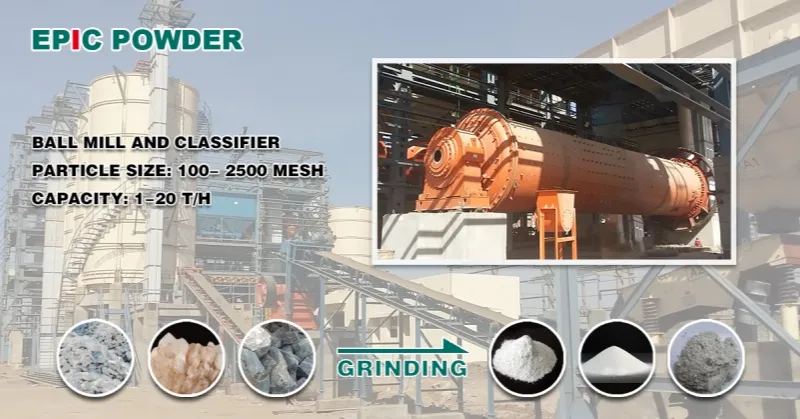
ボールミル+分級システム
The most common dry processing route for DE ultrafine powder.
利点:
- Wide particle size range (D97: 20 μm → 3 μm)
- High throughput
- Suitable for fragile materials
- Relatively low cost
ジェットミル (Fluidized Bed or Disc Type)

Principle and Features:
Uses high-pressure airflow (air, steam, or inert gas) to accelerate particles, achieving ultrafine grinding through high-speed interparticle collisions and friction.
Application Advantages:
- Easily produces products with D97 < 10 μm or even finer
- Very narrow particle size distribution
- Especially suitable for low-density, easily breakable diatomaceous earth
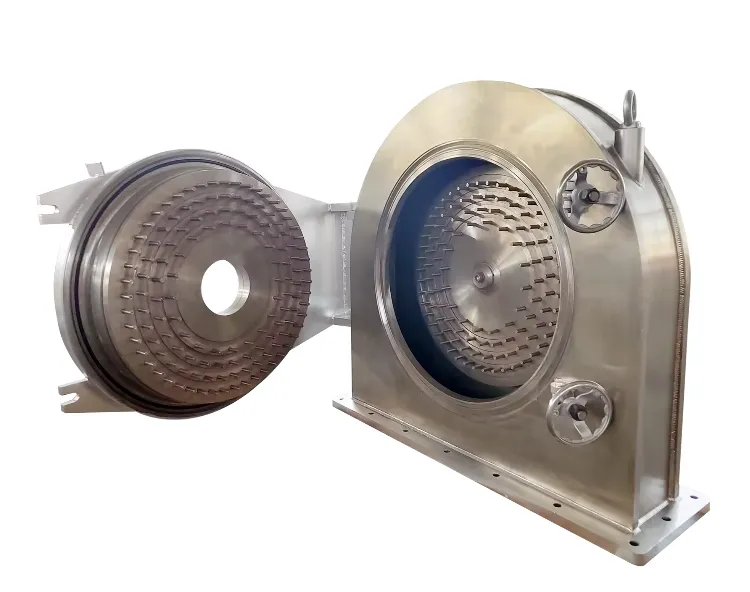
Impact Mill / Pin Mill
Principle and Features:
Uses a high-speed rotating rotor (such as hammers or pins) to deliver strong impact, shear, and frictional forces to the material.
Application Advantages:
- Relatively simple structure and easy maintenance
- Suitable for applications requiring moderate output and particle sizes in the 10–40 μm range

Vertical Roller Mill / リングローラーミル
Mostly used for 325–2000 mesh fine powder.
利点:
- High capacity
- 低エネルギー消費
- Stable particle shape
Stirred Mill / Wet Ultrafine Mill
Suitable for extremely narrow PSD or hybrid processes requiring surface modification.
利点:
- High grinding efficiency
- Accurate particle size control
- Can integrate with modification processes
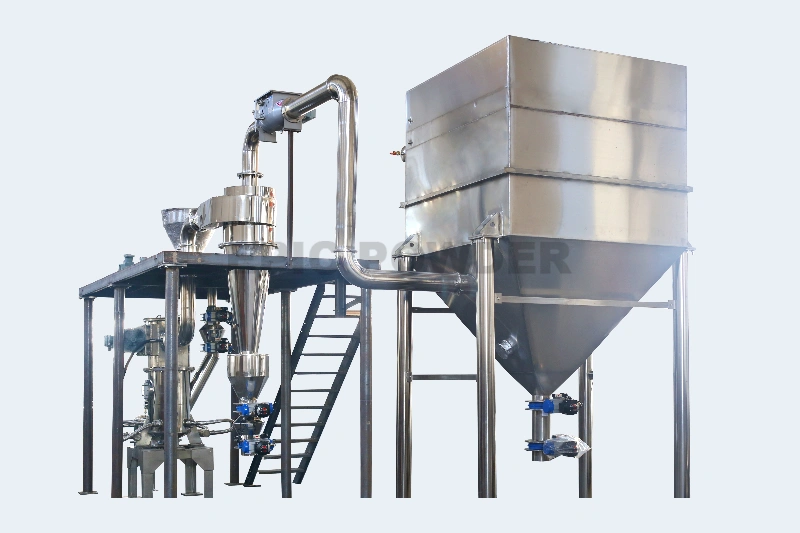
High-Efficiency Classifier
Principle and Features:
Usually paired with grinding equipment. It precisely separates qualified ultrafine powder using airflow and centrifugal forces, while coarse particles are returned to the grinding chamber.
Application Advantages:
- Ensures product consistency with a 狭い粒度分布
- A key component for achieving large-scale, stable production of ultrafine powders
Typical Specifications of Ultrafine DE for Coatings (2024–2025)
| Grade | D97 (μm) | Oil Absorption (g/100 g) | Whiteness (ISO) | SiO₂ (%) | Key Applications |
|---|---|---|---|---|---|
| DE-800 | ≤15 | 130–160 | ≥90 | ≥89 | General interior coatings |
| DE-1250 | ≤10 | 140–180 | ≥92 | ≥90 | Matte & semi-matte architectural coatings |
| DE-UF5 (Ultrafine) | ≤5–6 | 120–150 (after modification) | ≥94 | ≥91 | Premium zero-VOC water-based matte paints, coil coatings |
| DE-Nano | ≤2–3 | 100–130 (deep modification) | ≥95 | ≥92 | Replaces 20–40% silica powder/micronized wax matting agents |
結論
Ultrafine grinding of diatomaceous earth is a typical “high value-added but highly challenging” powder project. Success depends on:
- Low-shear, low-temperature grinding methods (steam jet milling is the current industrial best choice)
- Precise multi-stage classification to achieve narrow PSD
- Timely surface modification to reduce oil absorption and agglomeration
- Strict control of crystalline silica and moisture throughout the process
Manufacturers capable of producing D97 ≤ 5–6 μm DE with intact porous structure will gain significant advantages in premium matte coatings—better matting efficiency, smoother hand-feel, improved anti-settling properties, and overall stronger competitiveness.

読んでいただきありがとうございます。この記事がお役に立てれば幸いです。ぜひ下のコメント欄にご意見をお寄せください。また、ご質問等ございましたら、Zeldaのオンラインカスタマーサポートまでお問い合わせください。
— 投稿者 エミリー・チェン