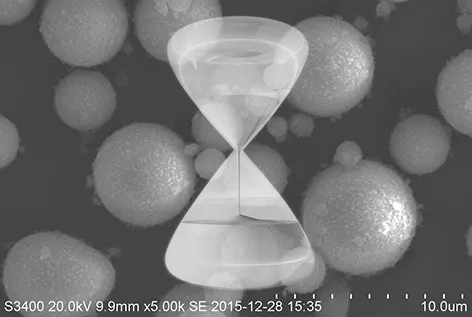
Ultra-fine Crushing, also known as ultra-fine grinding, refers to a modern processing technology that uses mechanical or fluid dynamic methods to overcome the internal cohesive forces of solids and reduce material particles to the micron or even nanometer scale. This technology originated in the 1970s and emerged as an interdisciplinary solution to meet the development needs of high-tech industries. The core objective of ultra-fine crushing is to produce ultrafine powders with particle sizes below 10 microns. Such products exhibit extremely large specific surface area, high surface energy, strong adsorption capacity, and unique physicochemical properties, including quantum effects and small-size effects.
Ultra-fine crushing technology is widely applied in food, pharmaceutical, chemical, and advanced materials industries. In the food industry, it improves raw material utilization, enhances texture, and promotes nutrient absorption. In the pharmaceutical field—particularly in traditional Chinese medicine processing—it enables cell wall breakage, significantly improving bioavailability and therapeutic efficacy. In the field of advanced materials, it is a key process for preparing high-performance ceramics and nanofunctional materials. Despite its many advantages, the technology also faces challenges such as high energy consumption, equipment wear, and cost control.
Brief History
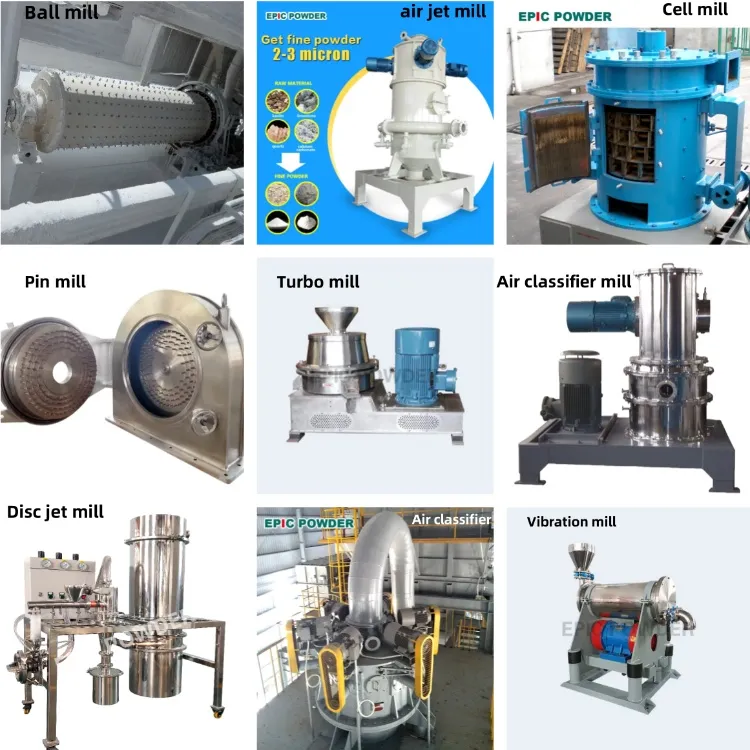
Ultra-fine crushing technology originated in Germany in the 1970s. To meet the demand for ultrafine powders in high-tech industries such as microelectronics and advanced materials, Germany developed the jet mill, marking the birth of ultra-fine crushing technology. In the 1980s, the technology gradually expanded into pharmaceutical, food, and chemical industries, becoming a critical material processing method.
China began researching ultra-fine crushing technology in the 1990s. Initially, efforts focused on introducing and digesting advanced foreign technologies. Subsequently, combining with traditional Chinese medicine theory, China developed a distinctive “cell wall breaking technology” for herbal medicine ultra-fine processing. At present, China has mastered the manufacturing technologies of key equipment such as jet mills, vibratory mills, and high-frequency mechanical impact mills, and has achieved large-scale applications in food and traditional Chinese medicine industries.
Principles and Characteristics
Crushing Mechanism
The basic principle of ultra-fine crushing is to use external mechanical energy (such as impact, shear, grinding, and friction) or fluid dynamics (such as high-speed airflow collision) to refine material particles. During the crushing process, particles are subjected to enormous instantaneous impact forces, which cause lattice structure damage and dislocations within the material, ultimately breaking it into finer particles.
Unlike conventional crushing, ultra-fine crushing is usually equipped with a precise classification system that separates qualified fine powder in real time while returning coarse particles for further grinding, thereby ensuring uniform particle size distribution.
Micronization Effects
When materials are crushed to micron or nanometer scale, their physicochemical properties change significantly, mainly manifested in the following three effects:
Surface Effect
As particle size decreases, the specific surface area increases sharply, and the proportion of surface atoms relative to total atoms rises rapidly. Surface atoms exist in a non-equilibrium high-energy state, exhibiting extremely high chemical activity and adsorption capacity, making them highly reactive with other atoms. For example, ultrafine metal particles are prone to oxidation and combustion in air.
Small-Size Effect
When particle size approaches or becomes smaller than physical characteristic dimensions such as light wavelength or de Broglie wavelength, macroscopic physical properties undergo qualitative changes. For example, the melting point of ultrafine particles decreases significantly (gold nanoparticles can melt below 300°C), and optical properties also change (extremely low reflectivity, appearing black).
Quantum Effect
When particle size decreases to the nanometer scale, electron energy levels shift from continuous to discrete, resulting in abrupt changes in magnetic, optical, acoustic, thermal, and electrical properties, producing unique quantum tunneling effects.
Preparation Methods
Mechanical Crushing Method
Mechanical crushing is currently the most widely used industrial method, characterized by low cost and high output. It can be divided into dry and wet processes.
jet mill
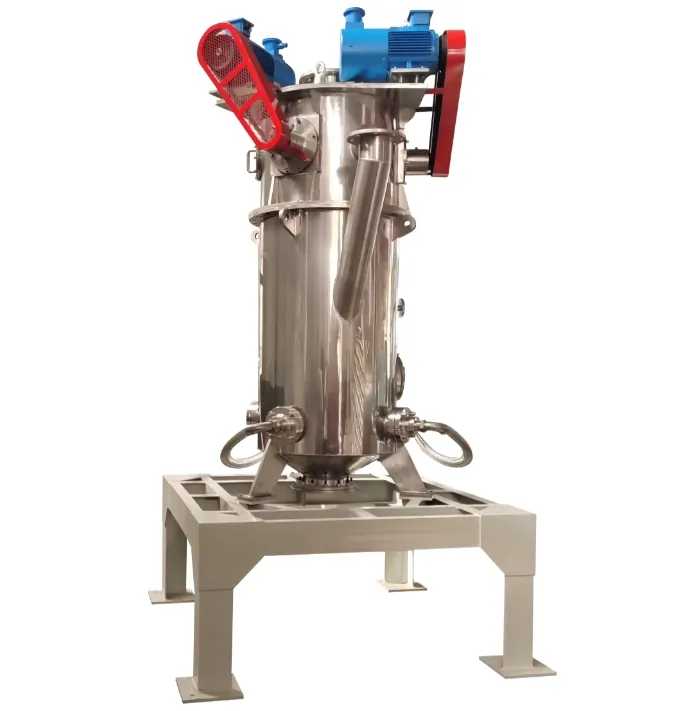
Compressed air or superheated steam passes through nozzles to generate supersonic airflow, causing material particles to collide at high speed and fracture. Jet milling features a “low-temperature effect,” as adiabatic expansion of gas produces cooling, making it particularly suitable for heat-sensitive materials (such as spices and bio-enzymes). However, it has relatively high energy consumption.
Vibratory Mill
Grinding media generate impact, grinding, and shear effects under high-frequency vibration. Vibratory mills offer high crushing efficiency and relatively low energy consumption, especially suitable for producing cell-level micro powders (such as Ganoderma spore powder).
Ball Mill and Stirred Mill
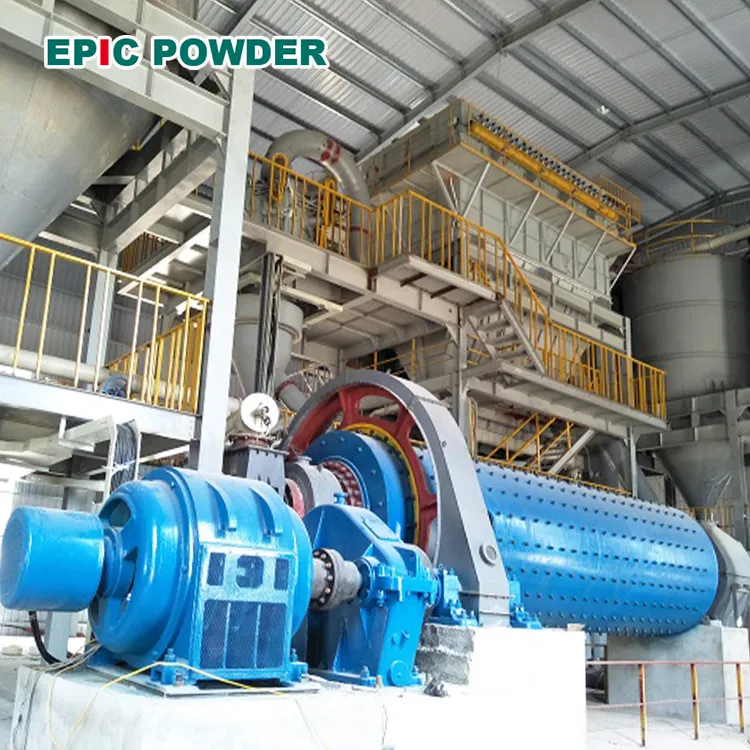
Rotational motion causes grinding media to impact and rub against materials. Ball mills have large capacity but lower efficiency and are typically used for coarse grinding. Stirred mills are highly efficient and capable of producing micron-scale powders, widely used in pigment and ceramic industries.
Colloid Mill
A wet grinding device that uses shear forces generated in the narrow gap between a high-speed rotating rotor and stator to crush slurry. It is suitable for high-viscosity liquids or solid–liquid mixtures (such as herbal extracts).
Physicochemical Methods
Cryogenic Grinding
Materials are cooled below their embrittlement temperature (e.g., using liquid nitrogen), reducing toughness and increasing brittleness before crushing. This method is particularly suitable for tough and fibrous materials (such as soybeans and herbal medicines), significantly improving crushing efficiency.
Ultrasonic Crushing
Ultrasound generates cavitation in liquids, and the shock waves produced by bubble collapse break particles. It is commonly used for biological cell disruption and nanomaterial dispersion.
Chemical Synthesis Methods
Chemical synthesis methods construct ultrafine particles from the “bottom up.” They are relatively costly and mainly used for special functional materials.
Precipitation Method
Metal ions are precipitated through chemical reactions to form hydroxides or salts, which are then calcined to obtain oxide powders. Advantages include simple operation and low cost; disadvantages include particle agglomeration and broad size distribution.
Sol-Gel Method
Metal alkoxides or inorganic salts undergo hydrolysis and polycondensation to form a sol, which then gels, dries, and calcines to produce powders. Advantages include high purity, good chemical uniformity, and controllable particle size; disadvantages include large drying shrinkage and complex processing.
Vapor Deposition Method
Gaseous precursors undergo chemical reactions on substrate surfaces or in the gas phase to form ultrafine particles. Advantages include high purity and good crystallinity; disadvantages include expensive equipment and high cost.
Applications
Food Industry
In food processing, ultra-fine crushing mainly improves nutrient utilization and texture.
Fruit and Vegetable Processing
Fruits and vegetables are made into micropowders (such as carrot powder and spirulina powder), retaining nutrients while improving mouthfeel and facilitating addition into bread, beverages, and other foods. For example, ultrafine fruit and vegetable powders can partially replace gelatin in cold foods, reducing costs and improving texture.
Tea Powder and Beverages
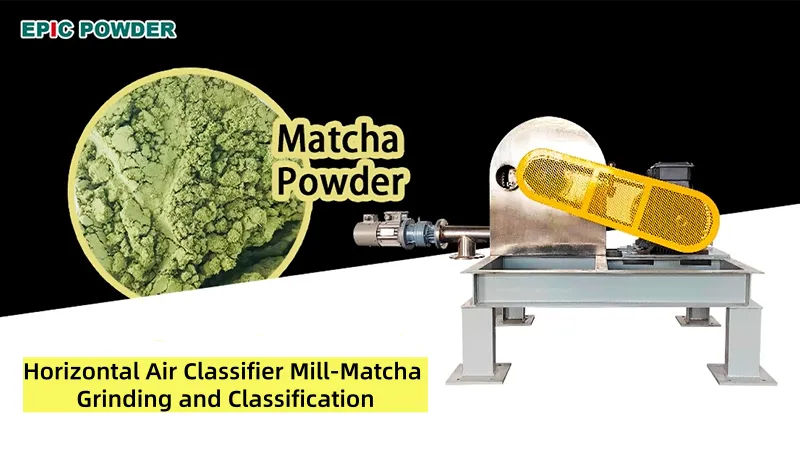
Production of instant tea powder and fruit/vegetable juice powder increases dissolution speed and enhances absorption. In traditional tea drinking, most nutrients remain in tea residues, while ultrafine tea powder enables full-component utilization.
Seasonings
Ultrafine spices (such as pepper and chili powder) have extremely fine particles, significantly enhancing flavor intensity and release. They offer excellent dispersion and stronger aroma release.
Pharmaceuticals and Health Products
In traditional Chinese medicine, ultra-fine crushing is known as “cell wall breaking technology” and is a key method for enhancing efficacy.
Cell Wall Breaking
The cell walls of plant medicinal materials are broken, exposing internal active ingredients directly, thereby greatly increasing dissolution rate and bioavailability—often several times or even dozens of times higher. This means that a small amount of ultrafine powder can achieve the same therapeutic effect as traditional coarse powder.
Pharmaceutical Applications
Ultrafine powder formulations (such as powders and capsules) require smaller dosages and offer faster absorption, suitable for chronic disease management. For hard or fiber-rich herbal materials (such as Panax notoginseng and Ganoderma), ultra-fine crushing significantly enhances efficacy.
Chemical Industry and Advanced Materials
Functional Fillers
Ultrafine calcium carbonate, talc, and other fillers significantly improve mechanical, optical, and processing properties of plastics and rubber.
Ceramic Materials

Used to prepare high-performance structural and functional ceramics. Ultrafine powders have high activity, lowering ceramic sintering temperature and improving density and product quality.
Coatings and Pigments
Ultrafine pigments enhance hiding power, gloss, and coloring strength, widely used in high-end coatings and inks.
Value and Impact
The emergence of ultra-fine crushing technology has greatly promoted industrial upgrading in related sectors. In the food industry, it has enhanced high-value utilization of food resources and enabled the development of many new functional food ingredients. In the pharmaceutical field, it has provided strong technical support for the modernization of traditional Chinese medicine, solving issues of slow efficacy and low utilization rate, and promoting standardization and refinement of herbal formulations.
However, the technology also faces challenges. Since micron-scale crushing requires enormous energy input, energy consumption is often several times higher than traditional methods, demanding improved energy-efficient equipment design. Additionally, high-speed mechanical components wear rapidly, leading to higher maintenance costs and potential metal contamination. Therefore, in pharmaceutical applications, extremely strict requirements are imposed on equipment materials and cleanliness. Nevertheless, with continuous technological advancement, the value of ultra-fine crushing technology in increasing product added value and conserving resources is becoming increasingly prominent.

“Thanks for reading. I hope my article helps. Please leave a comment down below. You may also contact Zelda online customer representative for any further inquiries.”
— Posted by Emily Chen