Lựa chọn đúng máy nghiền bột siêu nhỏ (Máy nghiền siêu mịn, máy nghiền bột siêu nhỏ (micro) là rất quan trọng—đặc biệt là khi độ mịn mục tiêu của bạn đạt đến vài micron, dưới micron, hoặc thậm chí nanomet (D50 < 2 μm hoặc D97 < 10 μm). Các ứng dụng điển hình bao gồm chất chống cháy (nhôm hydroxit/magiê hydroxit), canxi cacbonat GCC/PCC, talc, bột silica, gốm sứ, vật liệu pin, dược phẩm, bột màu, v.v. Việc lựa chọn sai thiết bị thường dẫn đến tiêu thụ năng lượng cao, phân bố kích thước hạt rộng, năng suất bột mịn thấp và hao mòn nhanh.
Dưới đây là hướng dẫn tuyển chọn mới nhất và có hệ thống nhất:
Xác định kích thước hạt mục tiêu và phân bố của bạn
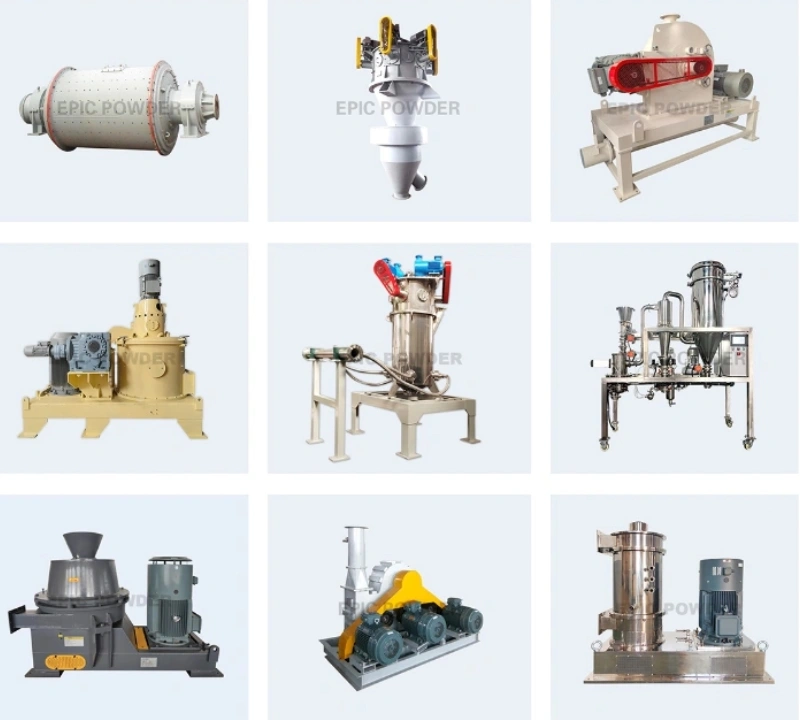
D97 20–45 μm:
- Máy nghiền bi + máy phân loại khí
- Máy nghiền va đập, máy nghiền ghim
D97 5–20 μm:
- Máy nghiền phân loại khí (ACM)
- Máy nghiền cơ khí hiệu suất cao
D97 < 5 μm (Mức siêu mịn):
- Máy nghiền phản lực (giường tầng sôi, dòng phun ngược chiều)
- Hệ thống phân loại độ chính xác cao
Cấp độ dưới micromet / nano:
- Nhà máy phun hơi nước
- Bộ phân loại chính xác đa rotor
- Máy nghiền ướt có khuấy (nếu phương pháp nghiền ướt được chấp nhận)
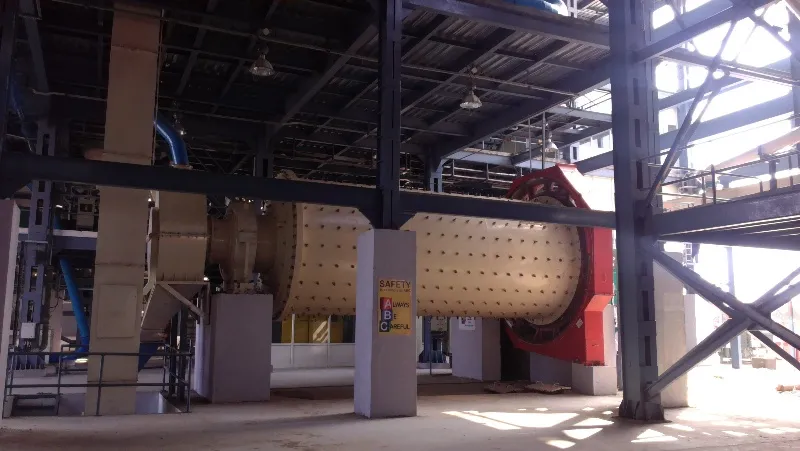
Nghiền khô so với Nghiền ướt
| Loại | Công nghệ sấy khô (Máy nghiền khí nén, máy nghiền ma sát, máy nghiền va đập tốc độ cao) | Quy trình ướt (Máy nghiền bi, Máy nghiền cát) |
|---|---|---|
| Kích thước hạt tối thiểu | Thông thường D50 ≥ 0,8–1 μm | Có thể đạt kích thước 80–300 nm |
| Hình thái hạt | Cấu trúc tinh thể không đều, được bảo tồn tốt. | Hoạt động bề mặt cao, tròn trịa hơn |
| Sự ô nhiễm | Gần như không có (có thể sử dụng lớp lót gốm) | Có thể bị nhiễm bẩn từ vật liệu nghiền |
| Vật liệu nhạy cảm với độ ẩm/nhiệt độ | Thích hợp | Không phù hợp (trừ khi có hệ dung môi) |
| Hậu xử lý | Đóng gói trực tiếp | Cần sấy khô + tách kết tụ |
| Vật liệu điển hình | ATH, MH, CaCO₃, talc, silica fume | ATH cao cấp, vật liệu pin, chất tạo màu |
Yêu cầu về năng lực sản xuất
- Quy mô phòng thí nghiệm/thử nghiệm: 1–50 kg/h → Máy nghiền tia trong phòng thí nghiệm hoặc máy nghiền bi nhỏ.
- Quy mô trung bình: Máy nghiền tia 100–800 kg/h → 300–750 mm hoặc máy nghiền hạt 30–100 L.
- Quy mô lớn: >1 tấn/giờ → Nhiều máy nghiền phản lực cỡ lớn hoạt động song song hoặc máy nghiền bi tuần hoàn 200–500 lít.
Mức tiêu thụ năng lượng và chi phí vận hành:
- Máy nghiền phản lực: 500–1200 kWh/t (tăng mạnh theo độ cứng và độ mịn)
- Máy nghiền cơ khí ACM: 80–250 kWh/t
- Máy nghiền bi ướt: 100–400 kWh/tấn (chưa bao gồm năng lượng sấy)
Độ cứng và độ mài mòn của vật liệu
| Độ cứng Mohs | Thiết bị được đề xuất |
|---|---|
| < 3 | Hầu như bất kỳ nhà máy nào |
| 3–5 | ACM, máy nghiền phản lực |
| 5–7 | Máy nghiền phun tầng sôi + lớp lót gốm |
| > 7 | Chỉ nghiền bằng máy nghiền tia hoặc nghiền ướt bằng hạt zirconia |
Yêu cầu về độ tinh khiết
Các ngành công nghiệp nhạy cảm với ô nhiễm và tạp chất kim loại:
Điện tử, vật liệu pin lithium-ion, chất độn bán dẫn
→ Máy nghiền phản lực hoặc máy nghiền cơ học có lớp lót gốm
Nhựa, chất phủ, sơn
→ Hệ thống máy nghiền phân loại bằng khí hoặc máy nghiền bi
Thực phẩm, dược phẩm
→ Thiết bị làm bằng thép không gỉ, đạt tiêu chuẩn GMP
Nếu bạn cực kỳ nhạy cảm với sự nhiễm bẩn kim loại, hãy chọn:
- Linh kiện gốm
- Bánh xe phân loại được phủ polymer hoặc gốm
- Nghiền không tiếp xúc (máy nghiền khí nén)
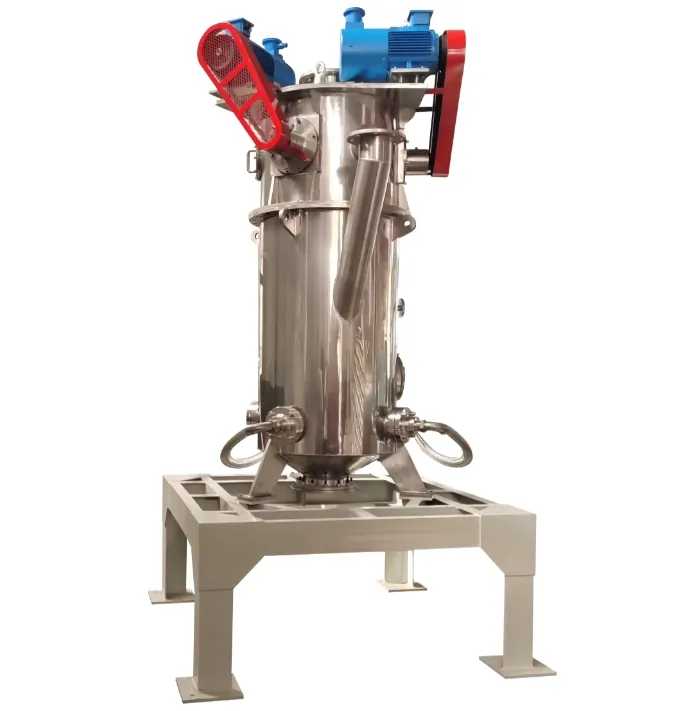
Các thông số kỹ thuật chính cần so sánh
- Phân loại tốc độ và độ chính xác của bánh xe (xác định D97)
- Áp suất nghiền / lưu lượng khí (máy nghiền phản lực)
- Kích thước vật liệu và tỷ lệ lấp đầy (nghiền ướt)
- Vật liệu lót: PU, alumina, zirconia, silicon carbide
- Hiệu quả của hệ thống làm mát
Các mẫu thiết bị phổ thông được khuyến nghị cho năm 2026
| Độ mịn mục tiêu | Thiết bị được đề xuất |
|---|---|
| D50 1–3 μm (khô) | Máy nghiền phun tầng sôi |
| D50 0,8–2 μm (khô) | Máy phân loại không khí ACM độ chính xác cao + |
| D50 0,5–1,5 μm (ướt) | Máy nghiền bi nằm ngang + máy sấy nhanh |
| Kích thước dưới micromet (ướt) | Máy nghiền bi tuần hoàn cỡ lớn (bi có kích thước 0,1–0,3 mm) |
Phần kết luận
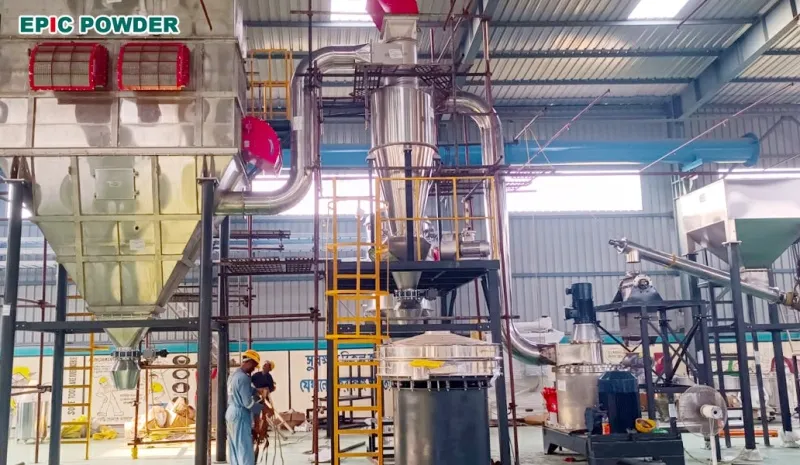
Việc lựa chọn máy nghiền bột siêu mịn tốt nhất đòi hỏi sự hiểu biết rõ ràng về đặc tính vật liệu, kích thước hạt mục tiêu, quy mô sản xuất, tiêu chuẩn độ tinh khiết và chi phí vận hành dài hạn. Với nhiều thập kỷ kinh nghiệm trong lĩnh vực nghiền siêu mịn, phân loại và kỹ thuật bột, Bột Epic Epic Powder cung cấp các giải pháp tùy chỉnh bao quát toàn bộ các công nghệ nghiền mịn khô và ướt – bao gồm máy nghiền khí nén, máy nghiền phân loại khí, hệ thống nghiền bi – phân loại và các dây chuyền nghiền ướt tiên tiến. Bằng cách tích hợp kiểm soát kích thước hạt chính xác, thiết kế ít gây ô nhiễm và hệ thống phân loại hiệu quả cao, Epic Powder đảm bảo sản xuất ổn định, chất lượng sản phẩm nhất quán và hiệu quả quy trình được cải thiện đáng kể. Cho dù bạn đang xử lý nhôm hydroxit, canxi cacbonat, silica, vật liệu pin hay bột công nghiệp có độ tinh khiết cao, Epic Powder đều cung cấp thiết bị và giải pháp trọn gói giúp bạn đạt được hiệu suất nghiền siêu mịn đáng tin cậy, có khả năng mở rộng và tiết kiệm chi phí.

Cảm ơn bạn đã đọc. Tôi hy vọng bài viết của tôi hữu ích. Vui lòng để lại bình luận bên dưới. Bạn cũng có thể liên hệ với bộ phận chăm sóc khách hàng trực tuyến của Zelda nếu có bất kỳ thắc mắc nào khác.
— Đăng bởi Emily Chen