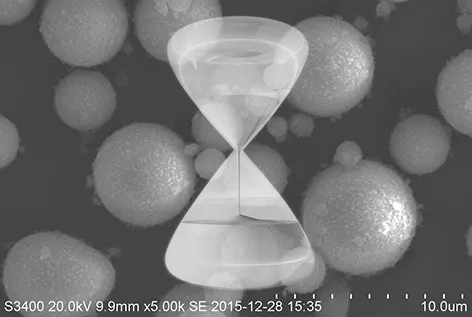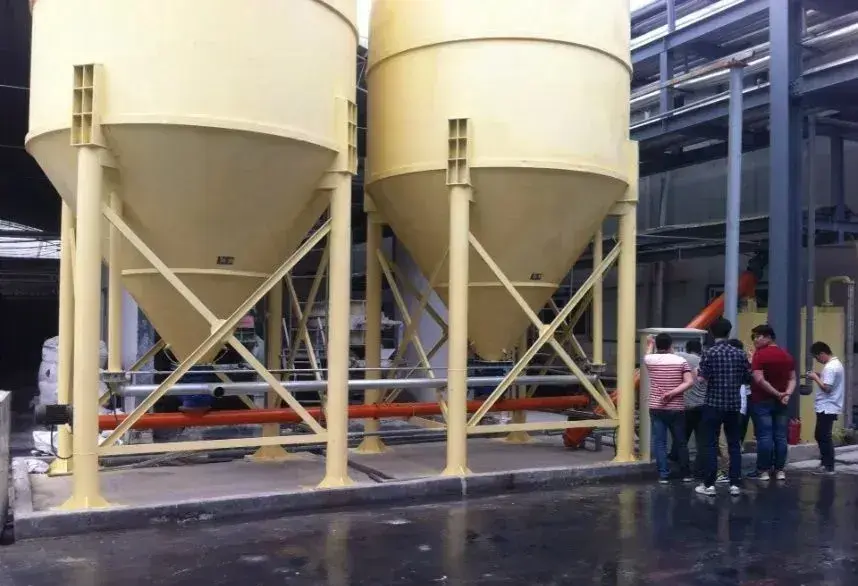
In powder coating processing, kaolin serves as an important functional filler. It is widely used to enhance coating film hardness, corrosion resistance, opacity, and anti-settling performance. Powder coatings impose extremely strict requirements on kaolin powder: fine particle size (usually D97 ≤ 10μm or even finer), narrow particle size distribution, high purity, good whiteness, excellent dispersibility, and no introduction of metal contamination. These factors help avoid affecting electrostatic spraying performance and final coating film quality.
Faced with these demands, the jet mill (also known as air jet mill or fluid energy mill) and the air classifier mill (mainly referring to air classifier mills or ACM-type impact mills with integrated classification) have become the two mainstream ultra-fine grinding equipment options. Which one is more suitable for kaolin powder coating processing? This article analyzes the principles, characteristics, performance comparison, and application scenarios of both devices in detail. It aims to help enterprises make scientific selections.
Both types of equipment have their own advantages. The final choice must comprehensively consider capacity, fineness requirements, costs, and product positioning.
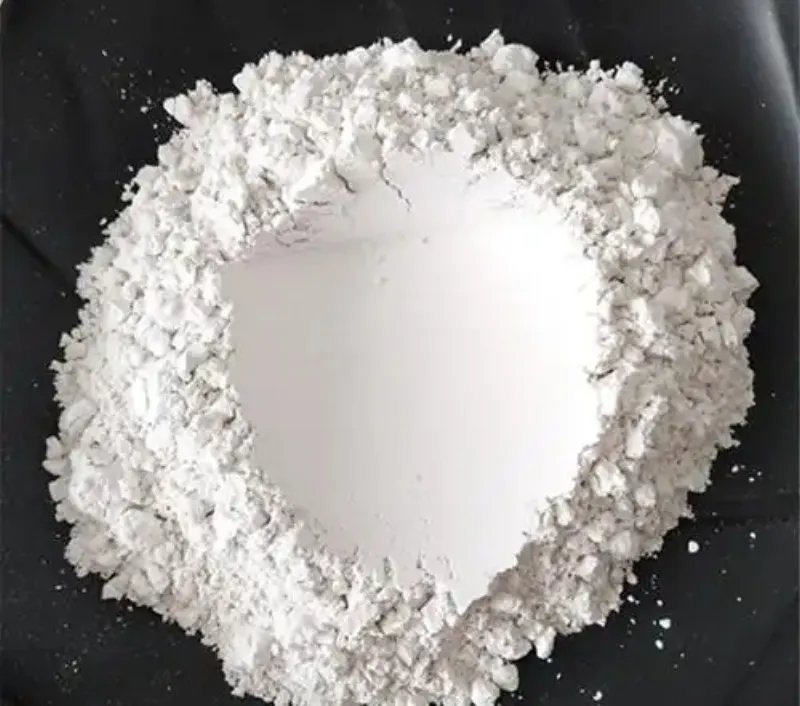
Application of Kaolin in Powder Coatings and Processing Requirements
Kaolin (chemical formula: Al₂Si₂O₅(OH)₄) is a layered silicate mineral. It possesses good chemical stability and optical properties. In powder coatings, kaolin is mainly used as a filler. It can improve the mechanical strength, hiding power, weather resistance, and leveling properties of the coating film. It is particularly indispensable in anti-corrosion coatings, architectural coatings, and industrial powder coatings.
The processed kaolin powder must meet the following key indicators:
- Particle size requirements: D50 in the range of 2-5μm, D97 ≤ 10μm, or even sub-micron level. This ensures uniform dispersion in the resin and avoids defects such as orange peel or craters.
- Particle size distribution: Narrow distribution (no large particles) to prevent gun clogging during spraying or uneven coating film.
- Purity and contamination control: Whiteness ≥ 90%, low iron content. This avoids metal ion migration that could cause discoloration or aging of the coating film.
- Surface characteristics: Smooth particles with good dispersibility, facilitating subsequent surface modification (such as organic coating to improve compatibility).
- Other requirements: Low moisture content (<2%), no thermal damage, and suitability for continuous dry-process production.
Traditional ball mills or Raymond mills struggle to meet ultra-fine requirements. In contrast, jet mills and classifier mills, with their dry ultra-fine grinding technologies, have become the mainstream choices. Jet mills emphasize “contamination-free ultra-fineness,” while classifier mills highlight “efficient integrated classification.”
Principles, Characteristics, and Applicability of Jet Mills
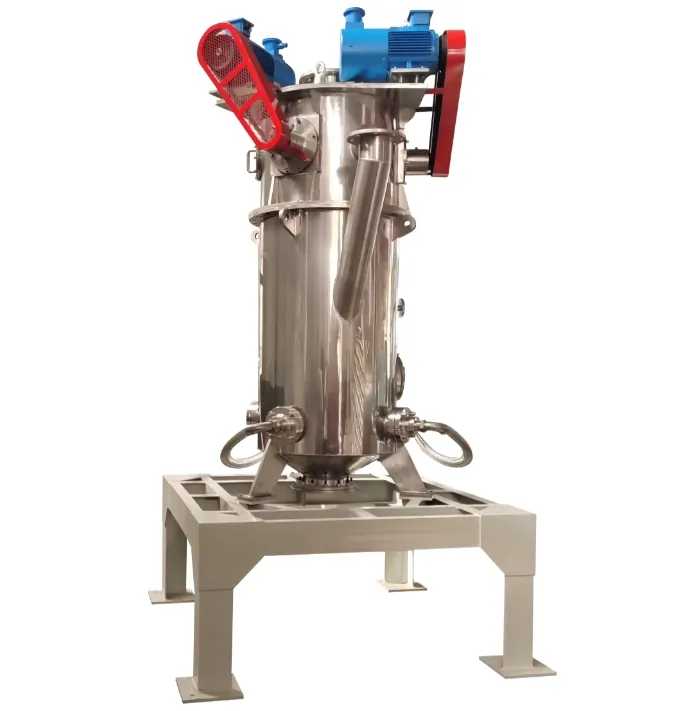
Jet mills use compressed air (or inert gas) accelerated to supersonic speeds (300-500 m/s) through Laval nozzles. This creates high-velocity gas streams inside the grinding chamber. Materials achieve size reduction through inter-particle collisions, friction, and shear at the nozzle intersection points. No mechanical grinding media are required. Common types include flat-type, opposing-jet, target-type, and fluidized-bed jet mills.
Main characteristics:
- Ultra-fine size and narrow distribution: Kaolin can be ground to D97 = 3-10μm, with concentrated particle size distribution. The particles have smooth surfaces and regular shapes.
- High purity and low contamination: Particle self-collision results in almost no equipment wear. This makes jet mills particularly suitable for high-whiteness kaolin. Inert gas protection (such as nitrogen) can isolate oxygen and prevent oxidation.
- Low-temperature grinding: Gas expansion provides cooling, keeping chamber temperatures low. This suits heat-sensitive materials and preserves the crystal structure of kaolin without thermal damage.
- Integrated operations: Drying, coating, or surface modification can be performed simultaneously.
- Disadvantages: Higher energy consumption (due to compressed air generation costs), relatively limited single-machine capacity (better for mid-to-high-end small-batch production), and higher equipment cost.
In kaolin processing, jet mills perform outstandingly. After jet milling, kaolin powder becomes finer, with higher purity and significantly improved whiteness. It is widely used as a filler in high-end coatings. Research in the mineral and metallurgical fields shows that jet mills are the preferred equipment for ultra-fine grinding of medium-hardness non-metallic minerals (such as kaolin and talc). They are especially suitable for high-grade powder coating applications that require iron-free processes.Principles, Characteristics, and Applicability of Classifier Mills
Principles, Characteristics, and Applicability of air Classifier Mills
Air Classifier mills integrate mechanical impact grinding with built-in air classification. A high-speed rotating rotor (with hammers, blades, or pins) subjects the material to impact, shear, and friction. At the same time, the built-in turbine classifier wheel uses centrifugal force and airflow for immediate classification: qualified fine powder exits with the airflow, while coarse particles return for further grinding.
Main characteristics:
- Efficient integration: Grinding and classification are completed in one step. Particle size control is precise (D97 is adjusted via rotor speed and classifier wheel). The yield of on-spec product is high (single-pass yield can reach 75% or more).
- High capacity and low energy consumption: Large processing volume makes it suitable for industrial-scale production. Compared with pure jet mills, energy consumption is lower, and investment payback is faster.
- Flexible particle size: D97 can be stably controlled in the 5-45μm range. It is particularly suitable for the <10μm fineness required by coating fillers, with no over-grinding.
- Wide material applicability: Good grinding effect on soft materials like kaolin. The dry process requires no water washing, and particle size distribution is narrow.
- Disadvantages: Some mechanical wear exists on rotors and stators, which may introduce trace metal contamination. For materials with extremely high purity requirements, wear-resistant materials or ceramic linings must be selected.
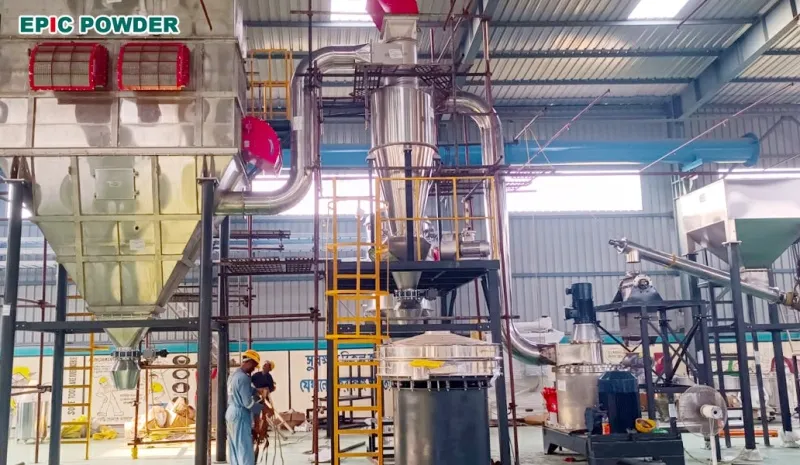
Air Classifier mills are specially designed for ultra-fine processing of non-metallic minerals. Kaolin-specific models (such as ZJ-C series) are widely used in the filler fields of coatings, plastics, and rubber. The equipment features optimized transmission and piping designs to reduce wear. It is particularly suitable for the demand for concentrated particle size distribution in powder coatings.
Performance Comparison of the Two Equipment Types in Kaolin Powder Coating Processing
1. Particle size and distribution: Jet mills have a clear advantage. The product achieves finer and more uniform particle size (collision-based grinding avoids overly coarse particles). Classifier mills achieve precise cutting through built-in classification, resulting in similarly narrow distributions. However, the ultimate fineness is slightly inferior to top-tier jet mills.
2. Purity and contamination: Jet mills excel with almost zero contamination. They perfectly meet the stringent requirements of powder coatings for high whiteness and no metal ions. Classifier mills require wear-resistant alloys or ceramic linings to control contamination.
3. Energy consumption and costs: Classifier mills are superior. Mechanical drive combined with integrated classification results in lower unit energy consumption. They are suitable for large-batch production. Jet mills have higher compressed air costs, but their purity advantage can reduce downstream modification costs in the long run.
4. Production efficiency and continuity: Classifier mills offer higher single-machine capacity, high automation, and easy integration with packaging lines. Jet mills are better suited for intermittent or small-batch high-end lines.
5. Maintenance and reliability: Jet mills have simple structures and fewer wearing parts (mainly nozzles). Classifier mills require regular inspection of rotors, but are generally durable overall.
6. Adaptability to powder coatings: Powder coating production emphasizes powder flowability and electrostatic performance. The regular particles and low contamination from jet mills are more beneficial for dispersion. The precise classification of classifier mills ensures batch-to-batch consistency and reduces spraying defects. In practice, high-end eco-friendly powder coatings tend to favor jet mills, while mid-to-high-end large-scale production prefers classifier mills.
Real-World Application Cases and Factors Influencing Selection
Practices from multiple enterprises show the following: When high-end calcined kaolin is used in powder coatings, jet mills can increase whiteness by 3-5 points and significantly improve the anti-corrosion performance of the coating film. For ordinary filler-grade kaolin, classifier-type impact mills are commonly used to achieve D97 < 10μm, increasing output by more than 30%. International powder coating giants often use ACM systems to process similar mineral fillers, achieving high-throughput production.
Key factors for selection include:
- Product positioning: For high-end coatings (purity >99.9%), choose jet mills. For medium-to-large-scale fillers, choose classifier mills.
- Capacity requirements: For annual output at the 10,000-ton level, prioritize classifier mills. For refined small-batch production, choose jet mills.
- Raw material characteristics: When moisture content is high or inert gas protection is needed, jet mills are more flexible.
- Investment budget: Classifier mills have lower initial investment and obvious energy-saving advantages.
- Environmental protection and safety: Both are dry-process and environmentally friendly, but jet mills offer easier control of dust-free emissions.
- Subsequent processes: When surface modification is required, jet mills can integrate coating functions.
Equipment Selection Recommendations
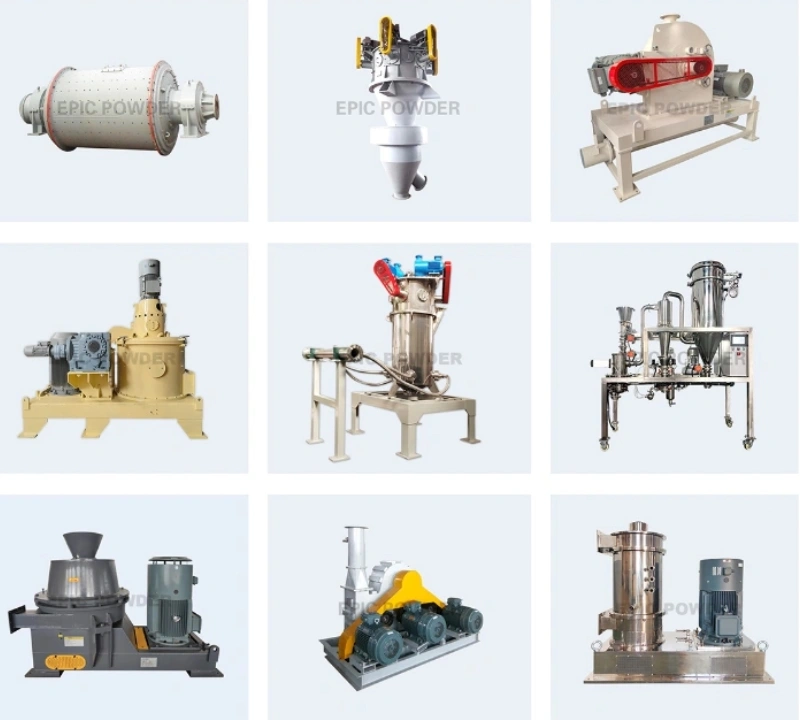
In summary, for kaolin powder coating processing, classifier mills offer greater overall advantages and are more suitable for most enterprises. Their integrated grinding-classification design, high efficiency, low cost, and precise particle size control directly match the demand for uniform fine powders in powder coatings. They provide particularly strong cost-effectiveness in large-scale production.
However, if the goal is ultimate purity, ultra-fine particle size (such as sub-micron levels for high-end functional coatings), or zero tolerance for contamination, then jet mills are the better choice. They can significantly enhance the quality of the final coating.
Enterprises are advised to conduct small-scale trials first. Test the raw material on both types of equipment, then examine the whiteness, particle size distribution, dispersibility, and coating film performance of the finished products. Combine this with economic calculations before making a decision. At the same time, consider hybrid processes (such as coarse grinding with a classifier mill and fine grinding with a jet mill) or classifier mills equipped with inert gas protection to achieve complementary advantages.
Conclusion and Outlook
Jet mills and classifier mills are both powerful tools for ultra-fine kaolin powder coating processing. The former focuses on “pure and ultra-fine” results, while the latter emphasizes “efficient and precise” performance. In the field of kaolin powder coatings, classifier mills have become the mainstream recommendation due to their integrated design and economic benefits. Jet mills, on the other hand, occupy a niche in high-end differentiated products.
As powder coatings develop toward high-performance and eco-friendly directions, equipment intelligence (online monitoring, variable frequency control) and energy-saving technologies will further combine the advantages of both. Enterprises should base their decisions on actual conditions, select equipment scientifically, promote the upgrading of the kaolin powder coating industry chain, and achieve both cost reduction, efficiency improvement, and quality enhancement.

“Thanks for reading. I hope my article helps. Please leave a comment down below. You may also contact Zelda online customer representative for any further inquiries.”
— Posted by Emily Chen