In the grand blueprint of marine biological resource development, Rhodophyta (Red Algae) has always held a pivotal position. From edible nori and dulse on the dinner table to industrial carrageenan and agar, and even anti-viral components in pharmaceuticals, Rhodophyta is hailed as the “Nutritional Treasury of the Ocean.” However, for a long time, the utilization rate of nutrients in red algae has faced a massive physical barrier. This barrier is a rigid cell wall composed of cellulose and complex polysaccharides. Traditional processing methods often only utilize the surface components of red algae. Large amounts of proteins, minerals, and active polysaccharides remain locked inside the cells and are wasted along with fibrous residue. To break this bottleneck, Rhodophyta ultrafine grinding technology was developed. This technology uses mechanical means to pulverize the material to sub-micron or even nanometer levels. It fundamentally changes the bioavailability of red algae and achieves the “total release” of nutrients.
1. The Science of Breaking: The Physical Challenge of Red Algae Cell Walls
The cell wall structure of Rhodophyta is much more complex than that of ordinary land plants. It contains a cellulose skeleton and is wrapped in large amounts of galactans, such as carrageenan or agar. This specific “reinforced concrete” structure grants red algae extreme toughness and resistance to chemical corrosion.
Micro-level Deconstruction
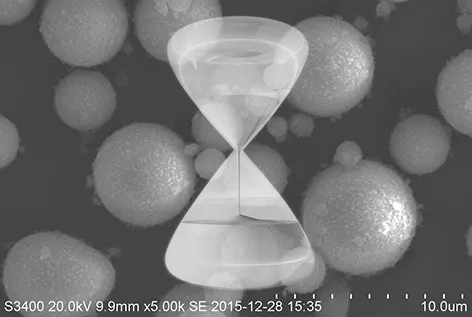
During the process of Rhodophyta Ultrafine Grinding, the material is subjected to high-frequency impact, shear, and friction forces. When the particle size is reduced to below 10μm, the original cross-linked polysaccharide matrix begins to undergo physical fracture. This fracture is not a simple physical displacement. It is the dismantling of the cell wall defense system at the molecular chain level.
Exponential Growth of Surface Area
As the degree of grinding deepens, the specific surface area of the particles increases geometrically. The huge surface energy causes active components deeply hidden inside the cells, such as phycoerythrin and trace elements, to be completely exposed. This means that in subsequent digestion or extraction processes, the solvent can contact the nutrients instantly. This greatly improves the dissolution rate.
2. Core Technologies: How to Achieve Efficient Cell Wall Breaking?
To achieve high-quality Rhodophyta ultrafine grinding, simply increasing the grinding time is not enough. One must rely on precision-engineered pulverization systems.
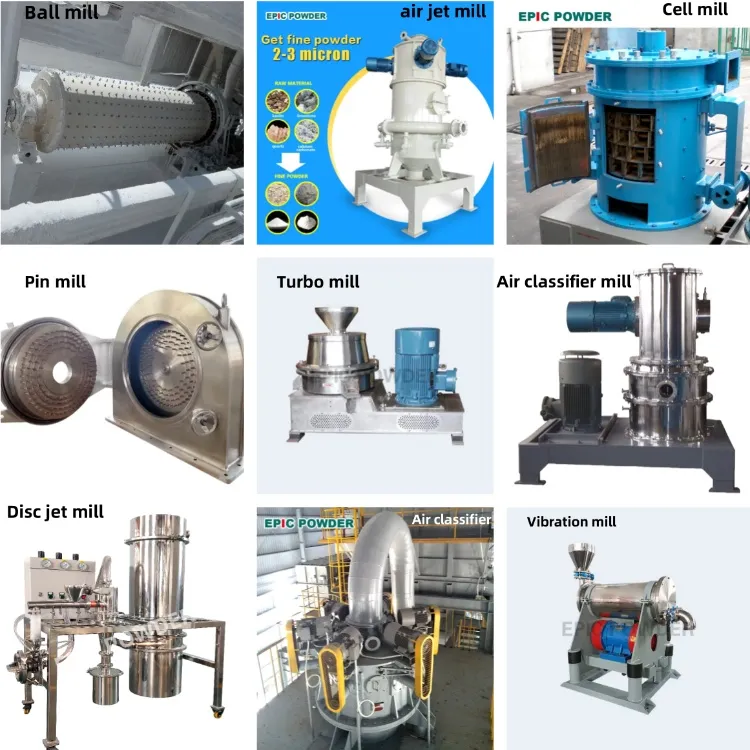
Air Classifier Milling (ACM)
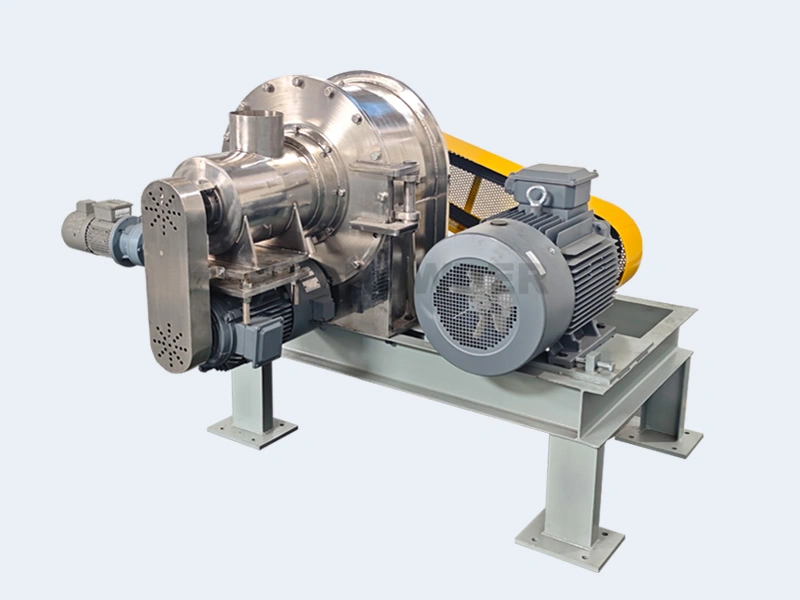
For red algae with fibrous toughness, the Air Classifier Mill is an excellent choice. It uses a built-in classifying rotor to precisely control the residence time of particles in the grinding chamber. Only fine powder that meets the cell wall breaking standards is carried away by the airflow. This effectively avoids energy waste caused by over-grinding. Meanwhile, the continuous airflow acts as a natural cooling mechanism.
Fluidized Bed Jet Milling
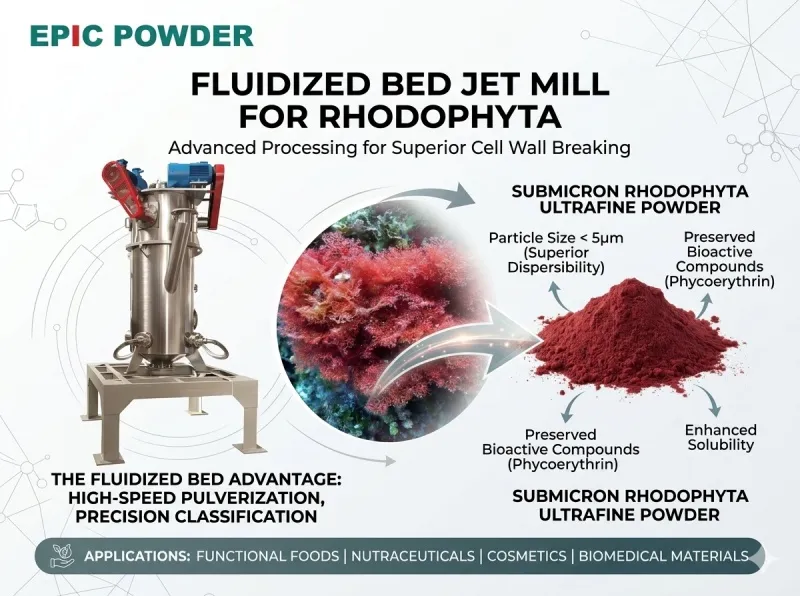
The jet mill utilizes high-speed supersonic airflow to cause red algae particles to collide with each other. This “material-grinds-material” principle achieves zero metallic contamination. This is crucial for the production of food-grade and pharmaceutical-grade red algae powder. Jet milling can grind red algae powder to D50=2μm or even finer, which is an effective way to achieve a 100% cell wall breaking rate.
Cryogenic Grinding
Many active substances in red algae, such as phycocyanin and natural vitamins, are extremely sensitive to temperature. By using liquid nitrogen cooling technology for cryogenic ultrafine grinding, the material temperature can stay below 0°C despite intense mechanical forces. This not only protects the color and aroma but also prevents the oxidative denaturation of nutrients.
3. Expert Answers: Core Questions Regarding Red Algae Grinding
During the promotion of deep processing for red algae, two key questions are common in the industry:
Q1: Does the heat generated by ultrafine grinding damage the fragile nutrients in red algae?
Answer: This is a very realistic concern. Traditional grinding does generate significant temperature rises, leading to discoloration and off-flavors. However, modern Rhodophyta Ultrafine Grinding equipment usually adopts high-volume cooling systems. For example, in the jet milling process, the adiabatic expansion effect of the high-speed airflow produces a cooling effect. This offsets the heat generated by friction. As long as the processing temperature is kept below 40°C, the unique bioactive components of red algae can be perfectly preserved.
Q2: Is “finer always better”? Is there a limit to fineness?
Answer: Although increased fineness improves the cell wall breaking rate, there is a “Golden Mean.” For Rhodophyta, when the particle size is reduced below 15μm, most cell walls are already broken, and the nutrient release rate reaches its peak. If one blindly pursues the nanometer scale (less than 1μm), extremely strong electrostatic adsorption occurs between the powders. This causes them to “agglomerate” back into large particles. This not only increases the difficulty of downstream processes—such as a sharp increase in slurry viscosity—but also greatly increases energy costs. Therefore, balancing fineness and cost for different application needs is the scientific approach.
4. Application Scenarios: The Downstream Revolution
Red algae powder treated with Rhodophyta Ultrafine Grinding undergoes a qualitative leap in application value.
Nutritional Supplements: A Leap in Bioavailability
In the field of dietary supplements, ultrafine red algae powder can be directly absorbed by the human body without complex chemical extraction. Experiments show that the in vitro digestibility of amino acids in ultrafine powder is more than 30% higher than that in ordinary coarse powder.
Carrageenan and Agar Extraction: Efficiency and Savings
In industrial extraction, pre-performing ultrafine grinding can significantly shorten the time for acid or alkali boiling. Since the cell walls are already mechanically broken, the extraction agent can quickly penetrate the interior of the particles. This not only improves the yield—usually by 20%—but also reduces the amount of chemical reagents used. This aligns with green production trends.
Cosmetic Industry: The Secret of Penetration
Seaweed polysaccharides in red algae have excellent hydrating and antioxidant functions. Ultrafine red algae particles can easily pass through the skin barrier to function in the dermis layer. Compared to traditional addition methods, ultrafine powder distributes more evenly in creams and lotions and provides a finer touch.
5. Process Optimization: Key Factors Affecting Cell Wall Breaking
To ensure that red algae ultrafine grinding achieves the best state, the following process parameters must be strictly controlled:
- Moisture Content Control: Red algae is hygroscopic. It is recommended to control the input moisture between 5% and 8%. High moisture makes the material too tough to grind. Low moisture may affect the stability of some biological components.
- Feeding Stability: Stable feeding is the prerequisite for ensuring a narrow particle size distribution (uniform fineness).
- Material Selection for Equipment: Considering the potentially abrasive nature of red algae, the interior of the grinding chamber should use high-hardness, wear-resistant, and food-standard liners. Examples include alumina ceramics or high-chromium alloys.
6. Conclusion
As a treasure gifted to mankind by the ocean, the deep development of red algae value is inseparable from the progress of physical processing technology. Rhodophyta Ultrafine Grinding technology solves the chronic problem of cell walls being difficult to break physically. Furthermore, it achieves the maximum release of nutrients through purely physical means without using chemical reagents.
As global demand for marine functional foods grows, ultrafine grinding technology will continue to evolve toward intelligence, low energy consumption, and full-component utilization. This is not just an upgrade of processing technology. It is an expression of respect and efficient utilization of natural resources. In the future, we will see more innovative products based on ultrafine red algae technology moving from the ocean to a healthy human life.

“Thanks for reading. I hope my article helps. Please leave a comment down below. You may also contact Zelda online customer representative for any further inquiries.”
— Posted by Emily Chen