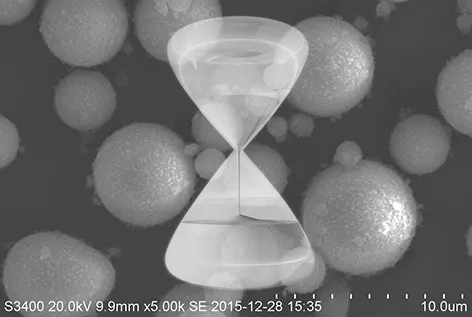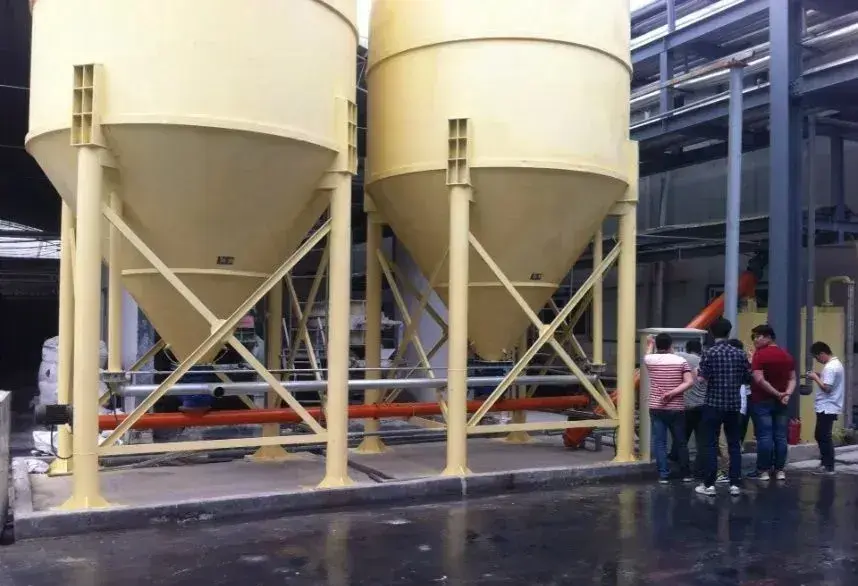
In lithium-ion battery production, the anode ultrafine milling process is a critical step, particularly for natural or artificial graphite anodes (and increasingly for silicon-based or silicon-carbon composite materials). The goal is to achieve a particle size typically in the sub-micron to several-micron range (e.g., D50 of 5–15 μm or finer for some advanced anodes), with narrow particle size distribution, high sphericity (especially for natural graphite spheroidization), and maximized specific surface area to enhance electrochemical performance.
However, this high-energy size reduction process introduces a significant risk of metal contamination —primarily iron (Fe), but also chromium (Cr), nickel (Ni), copper (Cu), aluminum (Al), and others. Even trace levels (often required <10–50 ppm for Fe in high-end battery-grade materials) can severely impair battery safety and cycle life:
- Metal particles act as catalytic sites → accelerate SEI growth and electrolyte decomposition.
- They can cause micro-shorts, lithium dendrite formation, or thermal runaway triggers.
- Iron contamination, in particular, reacts directly with lithium and degrades coulombic efficiency.
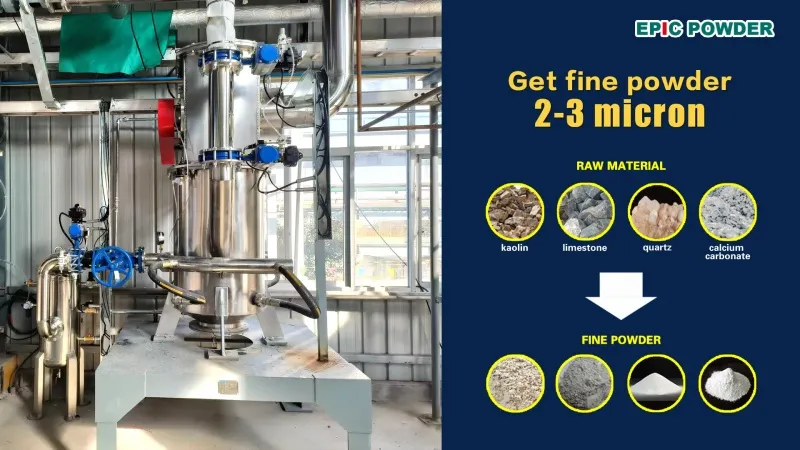
Main Sources of Metal Contamination in Ultrafine Milling
The primary contamination pathway is abrasive wear of grinding media, lining, and classifier components during high-intensity milling.
Common ultrafine milling methods for battery anodes include:
- Fluidized bed opposed jet mill (AFG type) → dominant for contamination-sensitive graphite.
- Mechanical impact mills with classifier (e.g., ACM style with special battery-grade variants).
- Bead mills / agitator bead mills (wet ultrafine grinding, used for silicon-graphite composites or dispersion before coating).
- Planetary / stirred ball mills (less common for final anode due to higher contamination risk).
Key contamination sources:
- Grinding media wear (beads, balls).
- Mill body / lining / nozzle / classifier wheel abrasion.
- Feeder / conveying system metal particle shedding.
- Air / gas-borne particulates (if not properly filtered).
Key Strategies to Prevent Metal Contamination
To achieve battery-grade purity, industry adopts a multi-layered approach combining equipment selection, material choices, process optimization, and post-processing.
1. Choose Non-Metallic / Low-Wear Contact Materials
| Component | Recommended Material | Purpose / Benefit | Typical Contamination Reduction |
|---|---|---|---|
| Grinding chamber lining | Ceramic (Al₂O₃, ZrO₂, SiC, Si₃N₄) | Avoids iron/chromium release | >90–95% vs steel |
| Nozzles / jets | Ceramic or polyurethane | High-velocity gas acceleration without metal | Essential for jet mills |
| Classifier wheel | Ceramic-coated or full ceramic | Prevents wear during high-speed classification | Critical for D90 control |
| Grinding media (bead mill) | Yttria-stabilized zirconia (YSZ), pure alumina, SiC | Lowest wear rate among dense ceramics | Fe <5–20 ppm possible |
| Avoid | Stainless steel, chrome steel, hard metal | High contamination even after short runs | — |
Many modern battery-grade jet mills (e.g., special ACM-BC or AFG variants) are specifically designed with full ceramic contact parts to achieve near metal-free processing.
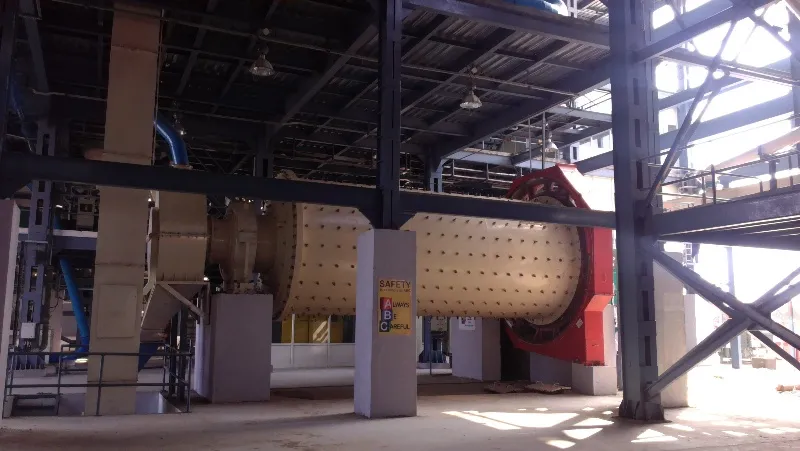
2. Select Appropriate Milling Technology
- Preferred: Fluidized bed opposed jet mill → self-grinding by particle-particle collision, minimal media/lining contact → lowest contamination risk for graphite spheroidization and ultrafine milling.
- Acceptable (with precautions): Dry mechanical impact mill with ceramic internals.
- Use cautiously: Wet bead milling → only with high-purity ceramic beads + optimized pH/slurry additives to reduce wear; often followed by magnetic separation.
- Avoid for final anode step: Traditional steel ball milling or attritors without extreme precautions.
3. Process Parameter Optimization to Minimize Wear
- Lower grinding pressure / gas flow in jet mills (trade-off with throughput and fineness).
- Control milling time and energy input → avoid over-grinding.
- Use process control agents (PCA) in wet milling (e.g., optimized pH, dispersants) → reduce agglomeration and media abrasion.
- Maintain low temperature → high temperature accelerates corrosion/wear.
4. Upstream and Auxiliary System Controls
- ব্যবহার করুন high-purity raw materials (low inherent metal content).
- Install inline magnetic separators (high-gradient) after milling.
- Employ metal detectors + automatic rejection valves.
- Use clean, dry compressed air/nitrogen with HEPA-level filtration.
- Operate in cleanroom-like or controlled atmosphere environments (especially for downstream handling).
- Regular cleaning validation (ultrasonic + solvent) of all product-contact surfaces.
5. Post-Milling Purification (If Needed)
Even with best practices, trace metals may appear:
- চৌম্বকীয় বিচ্ছেদ (strong rare-earth magnets) → removes ferromagnetic Fe particles.
- Acid leaching (very mild, controlled) → used sparingly for certain silicon anodes.
- Air classification again → removes dense metal fragments.
- ICP-MS monitoring → routine batch testing for Fe, Cr, Ni, etc.
Summary – Best Practice Combination for Anode Ultrafine Milling
For high-performance lithium-ion battery anode production (especially EV-grade):
- Use fluidized bed opposed jet mill with full ceramic lining and ceramic nozzles.
- Avoid any steel components in the product stream.
- Implement inline magnetic separation + metal detection.
- Monitor Fe content batch-by-batch (<20 ppm target for premium grades).
- Combine with clean conveying (e.g., premium flexible connectors without metal shedding).
Implementing these measures can reduce metal contamination from hundreds of ppm (conventional steel systems) to single-digit or even sub-ppm levels, directly improving battery cycle life, safety, and first-cycle efficiency.
Strict contamination control in the anode ultrafine milling step is no longer optional—it has become one of the core competitiveness factors in the battery materials supply chain.
"পড়ার জন্য ধন্যবাদ। আশা করি আমার লেখাটি আপনার কাজে লাগবে। অনুগ্রহ করে নিচে একটি মন্তব্য করুন। আরও যেকোনো প্রশ্নের জন্য আপনি Zelda অনলাইন গ্রাহক প্রতিনিধির সাথেও যোগাযোগ করতে পারেন।"
— পোস্ট করেছেন এমিলি চেন